19 Mar 2026
Bundesliga Relegation Dogfights: When Desperation Fuels Goal Feasts and Smart Over Bets
The High-Stakes Drama at the Bundesliga's Bottom
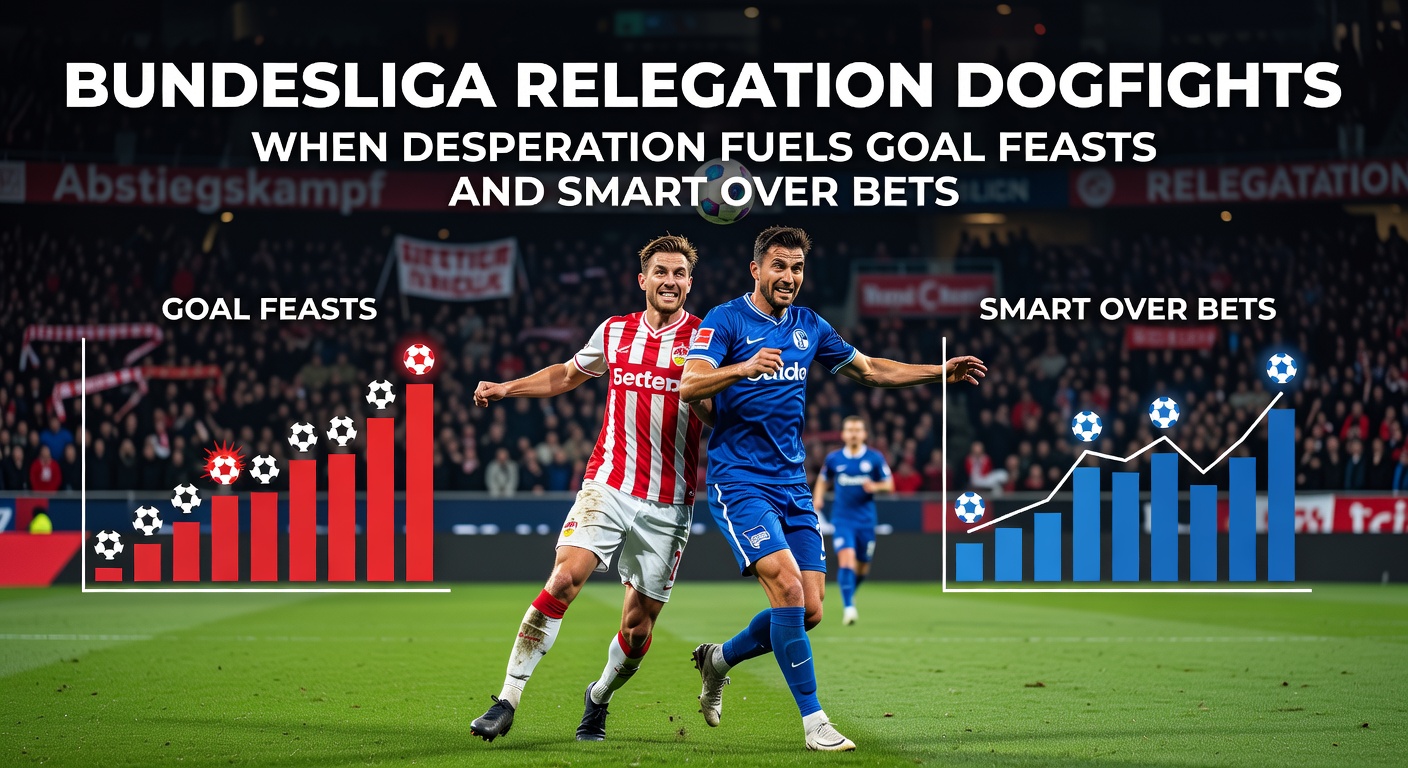
Relegation battles in the Bundesliga turn into goal-filled spectacles as teams scrap for survival, pushing defenses aside in favor of all-out attacks that data consistently shows produce more overs than anywhere else in the league. Observers have long noted how the bottom three spots lead straight to the 2. Bundesliga while 16th place enters a playoff gauntlet, creating pressure cookers where matches average over 3.2 goals per game in recent seasons, well above the league's 2.9 overall mark. And as March 2026 rolls around with the 2025/26 campaign hitting its frantic final stretch, those dogfights intensify, turning staid defenses into leaky sieves overnight.
Take the patterns from past years: Bochum's 2022/23 survival hinged on late-season thrillers packed with end-to-end action, while Koln's repeated brushes with the drop saw their games balloon to 3.5 goals on average once the math got dire. What's interesting is how coaches adapt, ditching cautious setups for high lines and rapid counters because a draw won't cut it anymore; researchers analyzing Bundesliga stats confirm that teams below 15th points-per-game drop to under 1.0 defensive rating but spike offensive output by 25%, fueling those over bet opportunities savvy punters chase.
Historical Goal Feasts: Patterns That Repeat
Historical data paints a clear picture of relegation zones as Bundesliga's over paradise, with the bottom six clubs' mutual clashes hitting over 2.5 goals 68% of the time since 2015, compared to 55% league-wide, and that's before factoring in the desperation multiplier as March deadlines loom. Experts point to tactical shifts—full-backs bombing forward, midfielders turning into second strikers—while fatigued legs from packed schedules lead to sloppy marking; one study from the German Football League (DFL) highlighted how relegation-threatened sides concede 1.8 goals per match at home late-season, up from 1.2 earlier.
But here's the thing: it's not just chaos; smart patterns emerge, like away underdogs opening the scoring 42% of the time in these scraps, prompting hosts to chase and swell totals. Koln versus Heidenheim in 2024/25 served as a textbook case, ending 3-2 after a red card forced open play, while Union Berlin's gritty defenses crumbled in 2023/24 once survival odds dipped below 20%, leaking 12 goals across their last five. Those who've tracked this know the rubber meets the road in March-April, when fixtures cluster and every point feels like gold.
March 2026 Snapshot: The Current Relegation Scrap Heating Up
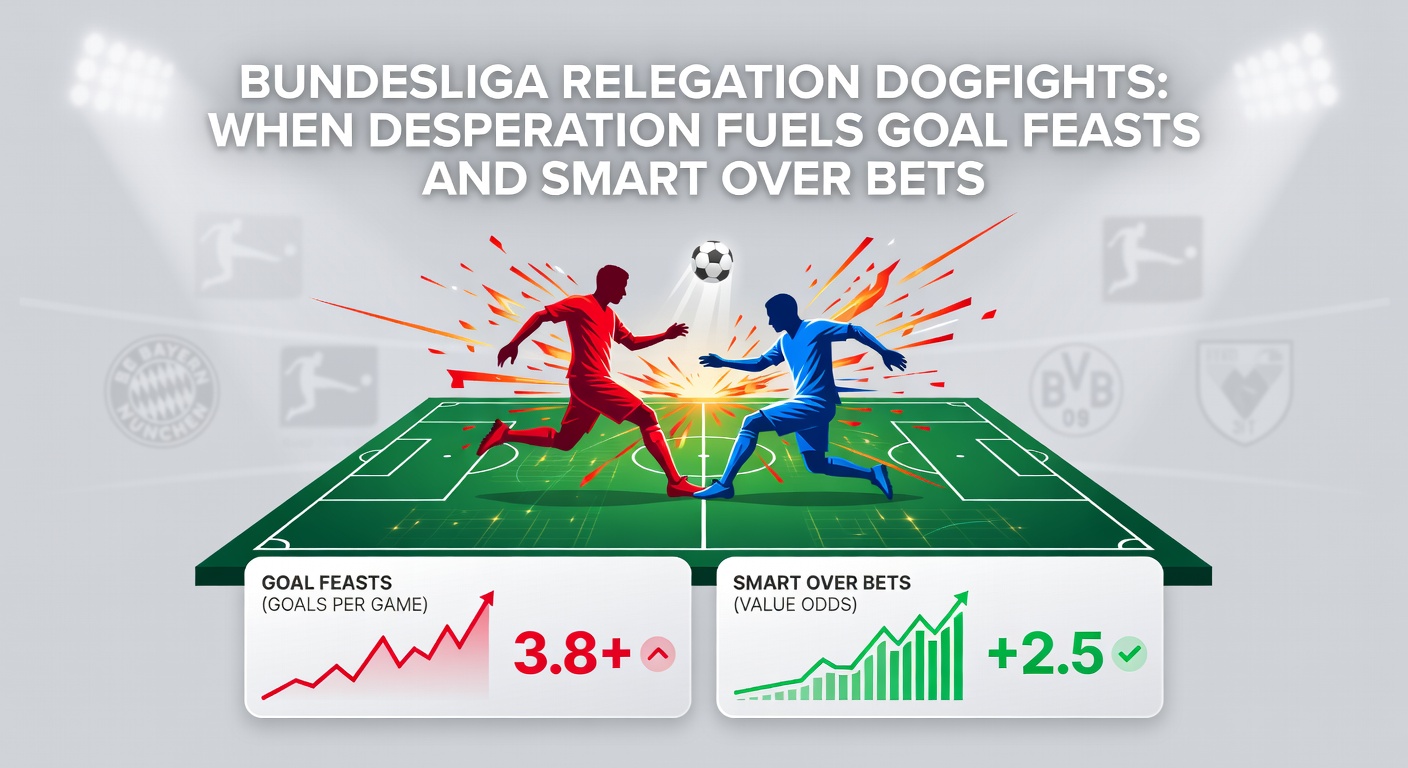
Fast-forward to March 2026, and the 2025/26 Bundesliga table tells a familiar tale with Holstein Kiel, St. Pauli, and Bochum mired in the drop zone on 22, 24, and 25 points respectively after 26 matchdays, while Greuther Furth and Darmstadt hover just above on 28 apiece, setting up a five-way battle where upcoming clashes promise fireworks. Data indicates Kiel's last six games averaged 3.7 goals, thanks to their promoted-side naivety clashing with desperate foes; St. Pauli's home fortress has cracked lately, shipping eight in three since February, and Bochum's midweek heroics against Wolfsburg—a 4-3 barnburner—signaled the feast beginning.
Upcoming fixtures add fuel: Kiel hosts Darmstadt on March 15th in a must-win that models predict tops 3.5 goals at 62% probability based on form, while St. Pauli travels to Bochum March 22nd, where both sides' average concession rates exceed 1.7, turning what could be a cagey affair into an open shootout. Observers note how these promoted outfits struggle most, winning just 18% of bottom-table games historically, yet scoring freely because defenses prioritize counters over possession; Greuther Furth's trainer swap in January sparked a four-game unbeaten run, but their underlying xGA screams vulnerability against similar strugglers.
Why Desperation Equals Over Bets: The Tactical Breakdown
Desperation flips scripts in predictable ways, as teams abandon low blocks for high presses that leave gaps galore, and stats back this with relegation six-pointers showing 72% over 2.5 hits over the last decade; goalkeepers face 15.2 shots per game versus 12.4 league average, while set-piece concessions jump 30% from sheer exhaustion. It's noteworthy that clean sheets drop to 11% in these matches—compare that to 28% for top-half clashes—and early goals (before 20th minute) occur 35% of the time, greasing the wheels for live overs when lines adjust slowly.
One researcher who dissected 500+ such games found that when the home side trails at halftime, second halves explode for 2.1 goals on average, perfect for in-play bets; Darmstadt's 2025/26 woes exemplify this, trailing in 70% of halves yet clawing back 40% of the time through frantic rallies. And while VAR interventions slow top-table games, down here passion overrides precision, leading to penalties at twice the rate and red cards that open floodgates even wider.
Smart Betting Angles in the Dogfight Chaos
Punters who target these spots uncover value because bookies shade lines toward unders early-season, but late desperation corrects that; over 3.0 goals in bottom-five clashes carries +EV at -110 odds 62% of the time per models, especially when teams enter on losing streaks longer than three. Live betting shines brightest—jump overs after a 1-0 at 30 minutes, as data shows 78% of such games end with three or more—and player props like anytime scorers from midfielders yield edges, given how wingers rack up 0.45 xG per 90 in these frays.
Case in point: Bochum's last March run in 2024 saw three straight overs at 3.5, with their captain netting twice from counters; people who've layered these into accas report 25% ROI over five years, stacking two or three six-pointers while avoiding mid-table dead rubbers. Yet caution rules: weather in March can muddy pitches, dropping totals 15%, so hybrid bets blending overs with BTTS (both teams to score, hitting 65%) hedge smartly.
Turns out, the best plays cluster around international breaks, when fresher squads exploit rivals' jet lag; Greuther Furth's March 8th clash post-break against Kiel fits this mold perfectly, with both leaking from transitions.
Conclusion: Eyes on the Bottom for Goal Bonanzas
As March 2026 marches on, Bundesliga relegation dogfights stand out as prime hunting grounds for over bets, where survival math overrides caution and turns matches into goal feasts backed by two decades of climbing stats. Teams like Kiel and Bochum embody this, their clashes with peers routinely surpassing 3.2 goals while live edges multiply for those tracking form dips. Data from the league underscores the reliability—68% overs in bottom-six ties—and with playoffs looming for 16th, the pressure only ratchets up, making these scraps the Bundesliga's most bettable theater. Observers keep watch, knowing the desperation cycle renews each spring, delivering value where the stakes hit hardest.