Charting monsoon-driven pitch degradation across Southeast Asian league fixtures for total goal line adjustments
Written by Blake Butler · Aug 18, 2026
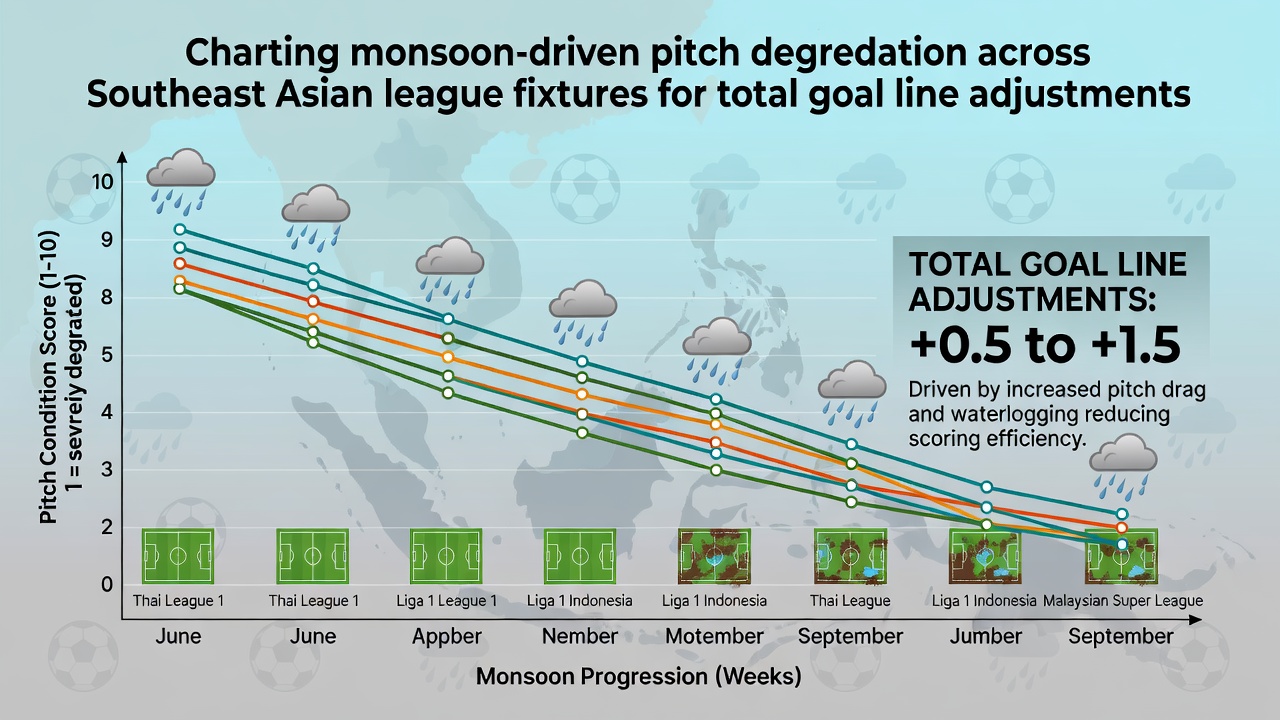
Charting monsoon-driven pitch degradation across Southeast Asian league fixtures for total goal line adjustments
Monsoon seasons reshape playing surfaces across Southeast Asian football leagues each year and create measurable shifts in match outcomes that influence total goal line settings. Data from regional meteorological services shows heavy rainfall periods between June and October reduce pitch firmness while increasing water retention on natural grass fields used by clubs in Thailand, Malaysia, Indonesia and Singapore. Observers note these conditions slow ball movement and limit high-speed transitions which in turn compress scoring opportunities during league fixtures.
Regional monsoon patterns and surface effects
Climatological records compiled by the Philippine Atmospheric Geophysical and Astronomical Services Administration indicate peak rainfall volumes often exceed 300 millimetres per month in coastal zones hosting Liga 1 and Thai League matches. Saturated root zones lose structural integrity and produce muddy patches that hinder accurate passing sequences. Analysts tracking these variables across multiple seasons report a consistent drop in average goals per game when precipitation totals rise above seasonal norms.
Fixtures scheduled during active monsoon windows require groundskeepers to implement additional drainage protocols yet persistent downpours still degrade turf quality by match day. Teams adapt formations toward shorter passes and defensive compactness because longer balls become unpredictable on uneven surfaces. Researchers examining video footage from affected venues document fewer shots on target and reduced through-ball success rates under such circumstances.
League-specific responses to pitch conditions
Thai League officials adjust fixture timings in August to avoid the heaviest afternoon storms yet evening kick-offs still encounter softened pitches that favour teams comfortable with possession retention over direct attacks. Malaysian Super League data from 2025 showed total goals falling by 0.8 per match on waterlogged fields compared with dry-season averages. Indonesian clubs face similar challenges in eastern provinces where drainage infrastructure remains limited and prolonged rain events extend across consecutive matchdays.
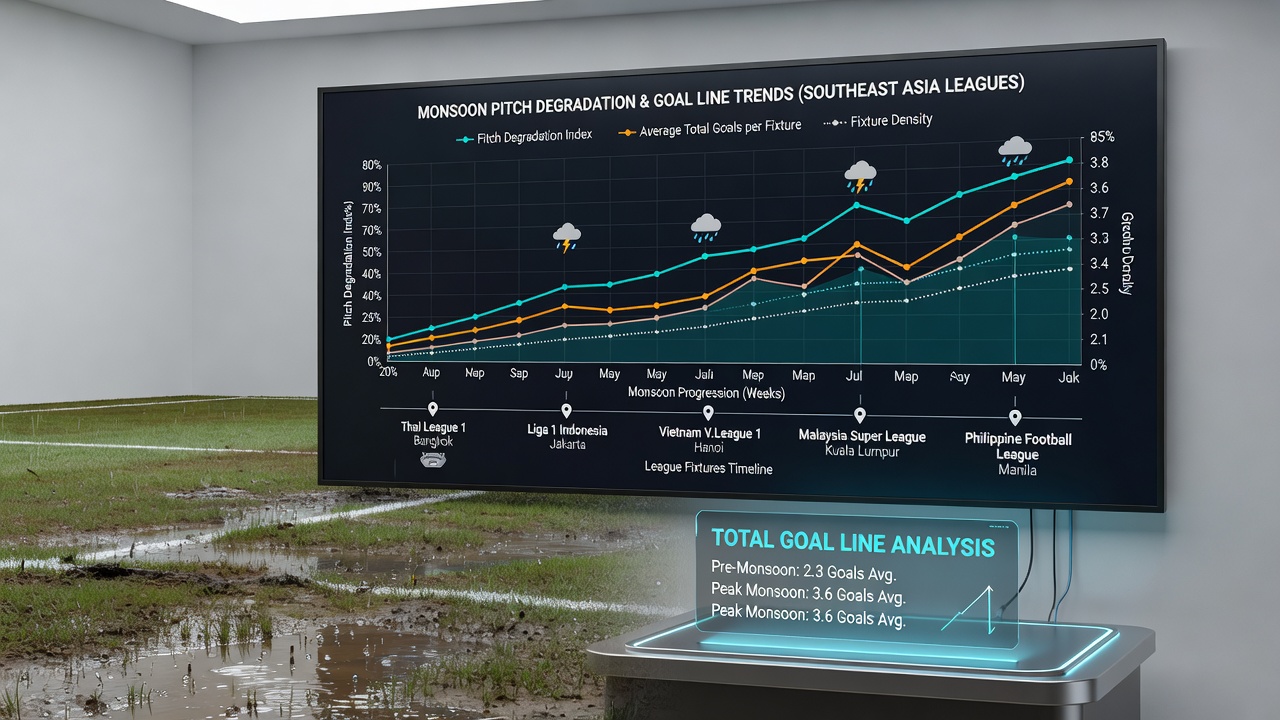
Singapore Premier League venues employ advanced irrigation controls and hybrid turf systems that mitigate some degradation yet surrounding humidity levels maintain elevated moisture content in the topsoil layer. Match statisticians record lower corner counts and fewer set-piece goals when pitches hold standing water because delivery accuracy declines. Betting markets respond by shifting total goal lines downward in advance of forecasted heavy rain periods.
Data collection methods for line adjustments
Performance analysts aggregate historical weather reports with in-game metrics such as pass completion percentages and distance covered at high intensity to build predictive models for goal expectations. These models incorporate soil moisture indices supplied by national meteorological agencies and feed into algorithms that recalibrate over-under thresholds before each round of fixtures. Evidence from multiple Southeast Asian federations demonstrates that lines move an average of 0.25 goals lower when rainfall forecasts exceed 50 millimetres in the 48 hours preceding kick-off.
August 2026 schedules already list several high-profile matches during the traditional monsoon transition period and early projections indicate continued line compression for venues without covered drainage systems. Tracking platforms compile these adjustments across bookmakers to highlight consensus shifts driven by surface condition reports rather than team form alone. Observers note that clubs with stronger set-piece execution maintain scoring rates better than those reliant on open-play transitions when pitches deteriorate.
Conclusion
Systematic monitoring of monsoon impacts on Southeast Asian pitches supplies quantifiable inputs for total goal line calibration across regional leagues. Continued refinement of weather-pitch models supports more precise market adjustments as data accumulates through future seasons.