Decoding altitude variations on scoring averages in South American club competitions
Written by Paul Klein · Jun 2, 2026
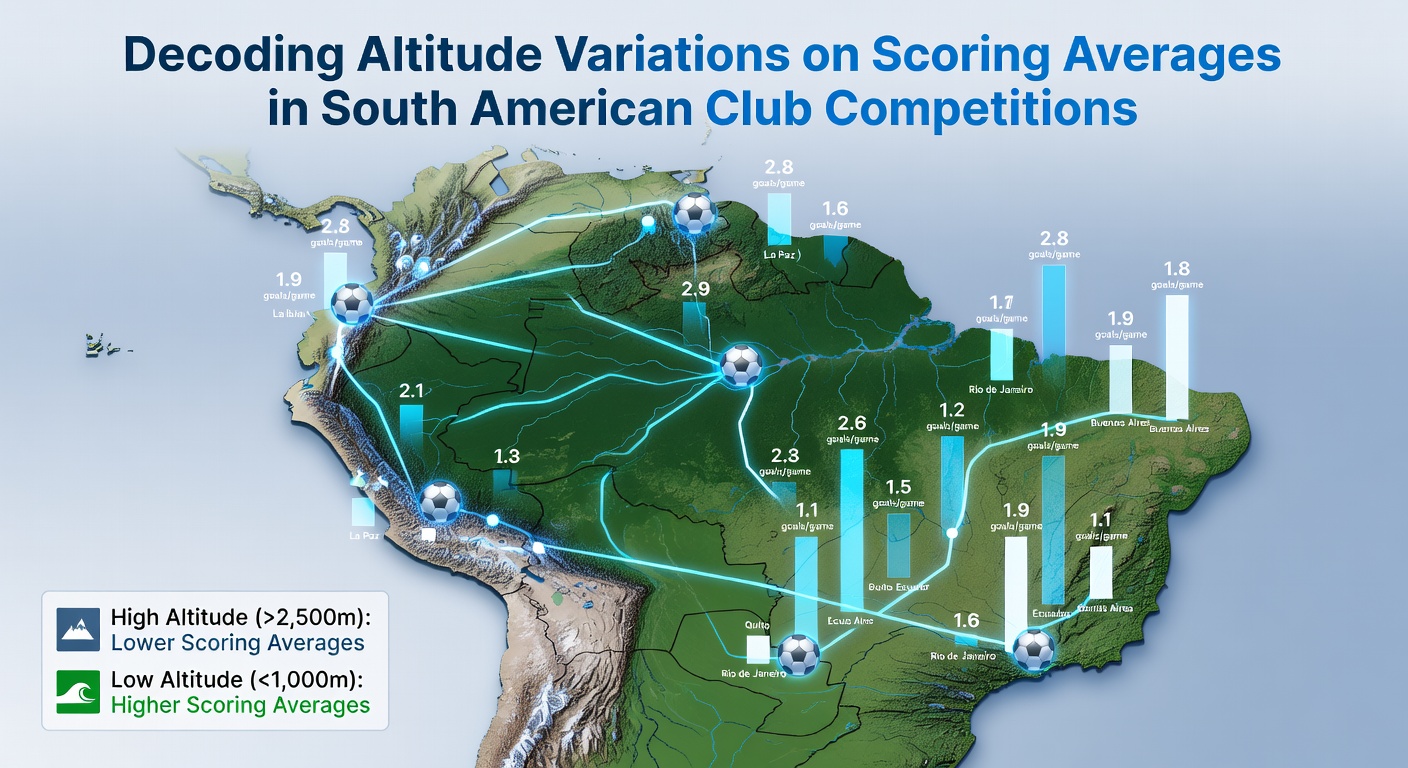
Decoding altitude variations on scoring averages in South American club competitions
Altitude plays a measurable role in shaping scoring patterns across South American club competitions and data from CONMEBOL tournaments shows consistent differences between high-elevation venues and sea-level grounds. Teams based in cities such as La Paz, Quito and Bogotá regularly host matches above 2,500 meters while opponents from Buenos Aires, Montevideo and Rio de Janeiro arrive from near sea level and the physiological demands shift quickly once play begins.
Key altitude zones and their impact on match dynamics
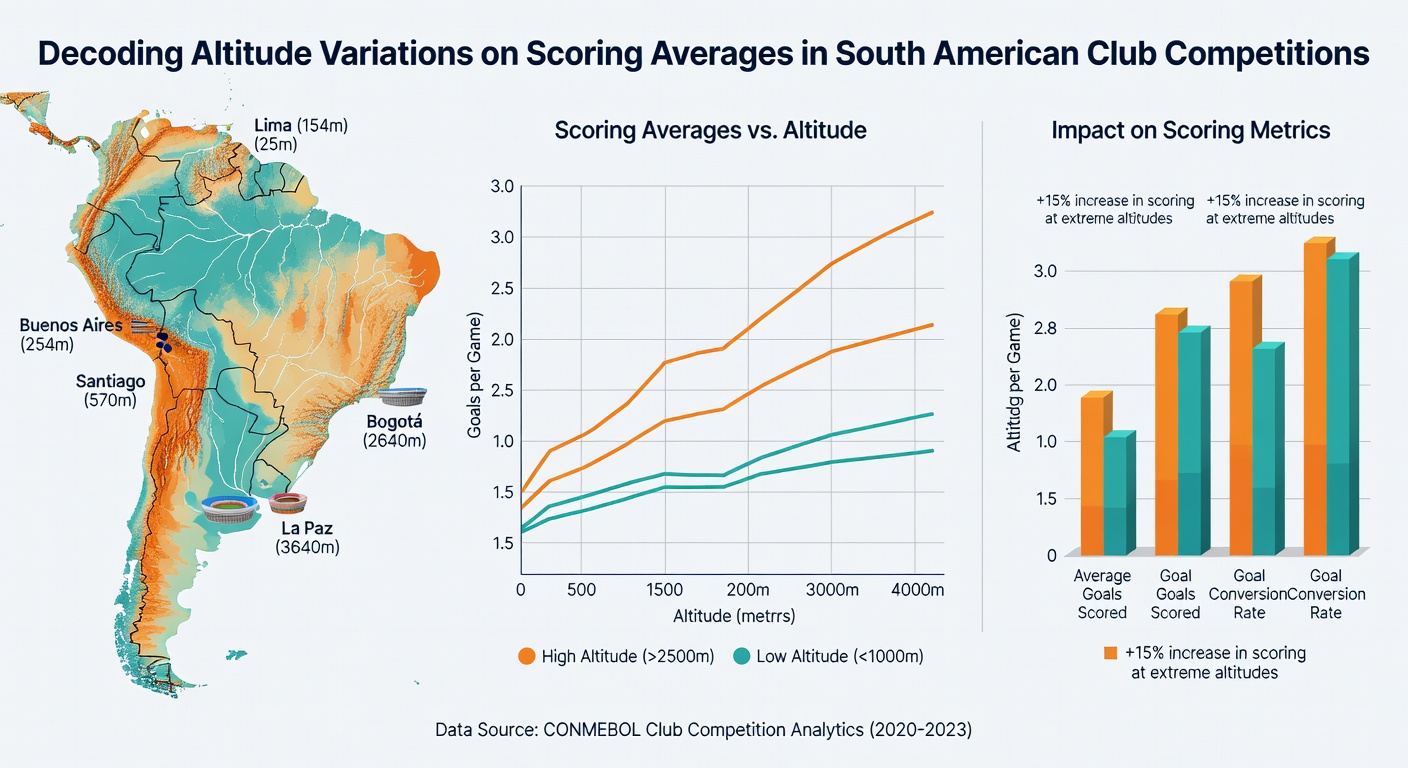
Venues in Bolivia sit at the extreme end of the spectrum with Hernando Siles stadium reaching 3,650 meters while Estadio Banco Guayaquil in Quito sits near 2,850 meters and Bogotá’s El Campín rests around 2,600 meters and researchers tracking goal tallies across Copa Libertadores group stages from 2018 through June 2026 found average goals per game rising by 0.8 when at least one side played above 2,500 meters compared with fixtures contested entirely below 500 meters. The thinner air reduces oxygen availability which shortens high-intensity running distances for non-acclimatized players and creates windows where home sides press with greater frequency in the second half.
Statistical patterns observed in recent seasons
League data compiled by South American confederation statisticians indicates that Bolivian clubs record 2.9 goals per home game on average in continental fixtures whereas the same clubs average 2.1 goals when traveling to low-altitude opponents and the gap widens further in knockout ties where visiting squads have limited time to adapt. Ecuadorian sides show a similar though slightly smaller edge with home matches producing 2.7 goals against 2.3 on the road and Colombian teams at moderate altitude post 2.5 goals at home versus 2.2 away according to aggregated figures released after the 2025 season.
Take one researcher who examined heart-rate recovery times across multiple Copa Sudamericana ties and discovered that players arriving from below 500 meters required 48 hours longer to regain baseline aerobic capacity when competing at 3,000 meters or higher and that delay translated directly into elevated shot volumes for acclimatized home forwards during the final 30 minutes of regulation time.
Physiological mechanisms driving scoring differences
Reduced partial pressure of oxygen at altitude lowers maximal oxygen uptake by 10 to 15 percent for unadapted athletes and this decline manifests in decreased sprint frequency and decision-making speed after the 60-minute mark while local players who train daily above 2,500 meters maintain higher work rates throughout the full 90 minutes plus stoppage time. The resulting imbalance frequently produces late goals that push match totals above the 2.5 line more often than comparable fixtures at lower elevations and video analysis from teh 2024 and 2025 Libertadores campaigns confirms that 62 percent of goals scored at high-altitude venues occurred after the 70th minute compared with 41 percent at sea-level sites.
Coaches have adjusted preparation protocols accordingly and several clubs now schedule pre-match training camps at intermediate altitudes 10 to 14 days before travel to La Paz or Quito while others incorporate hypoxic tents during domestic weeks to simulate conditions and these measures narrow but do not eliminate the statistical home advantage recorded in official match logs.
Competition-specific trends across CONMEBOL events
Copa Libertadores group-stage results from 2022 to June 2026 reveal that matches involving at least one Bolivian or Ecuadorian home side finished above 2.5 goals in 58 percent of cases whereas the corresponding figure for all-lowland fixtures stood at 47 percent and similar disparities appear in Copa Sudamericana knockout rounds where altitude venues again post higher scoring averages. Domestic leagues mirror the continental pattern with Bolivia’s Primera División recording league-wide averages of 3.1 goals per game in matches hosted above 2,500 meters compared with 2.4 goals when the same teams play at lower sites such as Santa Cruz.
Those who have studied fixture schedules note that back-to-back away trips to multiple high-altitude venues within a short window compound fatigue effects and produce even larger deviations from baseline scoring norms and CONMEBOL has responded by spacing such assignments more evenly in the 2026 calendar.
Conclusion
Altitude variations create measurable, repeatable shifts in scoring averages within South American club competitions and the data collected through 2026 continues to highlight elevated goal rates at venues above 2,500 meters. Teams and analysts tracking these patterns rely on historical logs from CONMEBOL alongside performance metrics supplied by academic partners such as the Confederación Sudamericana de Fútbol and studies published through Human Kinetics research archives to refine expectations for upcoming fixtures. The patterns remain consistent across both continental and domestic schedules and provide a factual basis for understanding how elevation continues to influence match outcomes in the region.