Decoding Fixture Congestion Impacts on Rotation Decisions Within CONCACAF League Schedules
Written by Lars Schmid · Jun 9, 2026
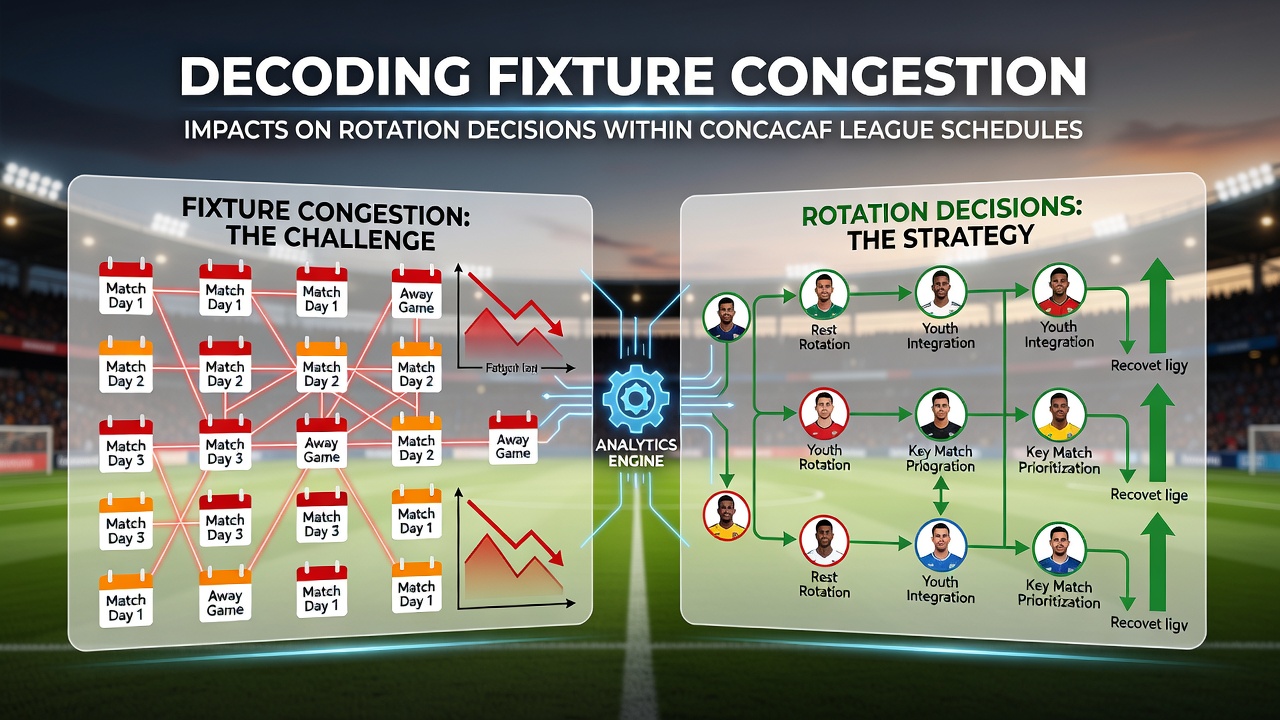
Decoding Fixture Congestion Impacts on Rotation Decisions Within CONCACAF League Schedules
Fixture congestion arises when CONCACAF clubs face clusters of matches across domestic leagues, cup competitions, and international windows, forcing technical staffs to adjust player availability through systematic rotation plans. Data from recent seasons shows that teams in Liga MX and Major League Soccer often navigate gaps of fewer than 72 hours between games, while Caribbean and Central American sides encounter additional travel demands that compound fatigue accumulation. Researchers tracking workload metrics have documented how these patterns influence substitution patterns and squad selection criteria.
Core Drivers of Congestion Patterns
League calendars in the region overlap with FIFA international dates and continental tournaments such as the CONCACAF Champions Cup, creating compressed periods where clubs must balance league points races against continental progression. Observers note that the 2025-26 schedule cycle already features multiple midweek blocks for MLS teams that also compete in the expanded Champions Cup format, while Mexican clubs manage Apertura and Clausura splits alongside national team commitments. Studies from North American sports science groups indicate that travel across time zones further elevates physical demands during these windows.
Rotation decisions therefore hinge on quantitative thresholds rather than intuition alone. Performance analysts monitor metrics including total distance covered, high-intensity efforts, and recovery heart-rate data to determine when starters require rest. Evidence compiled by league medical staffs reveals that clubs maintaining rotation depth experience lower soft-tissue injury rates during congested stretches, although exact percentages vary by squad size and budget constraints.
Rotation Frameworks Used by CONCACAF Sides
Coaches implement tiered rotation systems that categorize players according to positional demands and recent match loads. Fullbacks and midfielders often receive priority rest because their roles generate higher cumulative running volumes, whereas goalkeepers and central defenders may sustain longer consecutive appearances when tactical stability is required. Data sets released by MLS clubs show that average starter appearances drop by two to three matches per month during peak congestion, with academy graduates or designated substitutes filling gaps.
Central American federations have introduced centralized scheduling tools that flag potential clashes earlier in the season, allowing clubs to plan training microcycles around expected fixture density. Those who've studied these adjustments report that proactive planning correlates with steadier league results compared to reactive lineups assembled after multiple postponements or rescheduled ties.
Performance and Injury Correlations
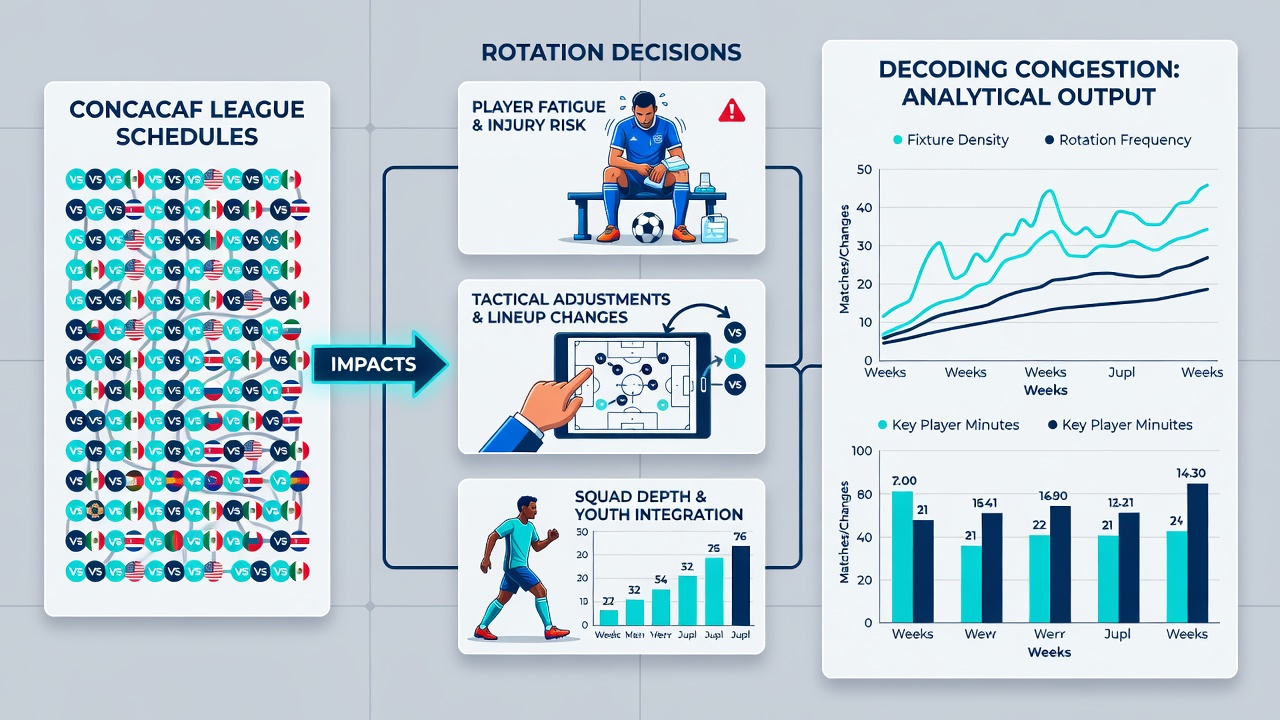
Longitudinal tracking by university research teams across the United States and Canada demonstrates that elevated fixture density coincides with measurable declines in sprint speed maintenance and pass completion accuracy after the fourth consecutive match within a 14-day span. Clubs that rotate at least four outfield players during such sequences preserve higher second-half output levels according to the same datasets. Injury surveillance programs coordinated through FIFA medical guidelines highlight that muscle strains rise when recovery intervals fall below 96 hours without corresponding workload management.
June 2026 stands out because the expanded FIFA World Cup hosted across North America will overlap with the tail end of domestic seasons for many CONCACAF participants. National federations already coordinate friendly windows in early summer, adding further fixtures for players who remain in club contention. Schedule planners anticipate that teams reaching continental finals may face six matches across three competitions inside four weeks, prompting earlier integration of squad rotation protocols.
League-Specific Adjustments
MLS franchises leverage roster rules that permit additional international slots and midseason acquisitions to maintain rotation options, while Liga MX sides rely more heavily on youth integrations during the Clausura phase. Caribbean clubs competing in the CONCACAF Caribbean Cup often face longer recovery gaps due to inter-island travel, leading some technical staffs to prioritize recovery modalities over tactical drills in shortened preparation windows. Figures released by regional confederation reports indicate that clubs adopting data-driven substitution thresholds record fewer instances of players exceeding individual workload caps.
Case examples from the 2024-25 campaign illustrate these dynamics clearly. One Mexican side reached the Champions Cup semifinals while simultaneously contesting a tight league title race, resulting in 11 different starting lineups across a nine-match stretch. The pattern produced consistent results because rotation decisions aligned with GPS-tracked fatigue indicators rather than calendar assumptions alone.
Conclusion
Fixture congestion within CONCACAF league schedules continues to shape rotation strategies through measurable workload thresholds, recovery timelines, and league-specific roster tools. Data from multiple monitoring programs shows that structured rotation preserves output and reduces injury incidence when applied consistently across congested periods. As the 2026 calendar approaches, clubs and federations are refining scheduling coordination and data integration to manage overlapping commitments more effectively.