Fixture pile-ups reshaping rotation habits across multi-competition campaigns and their effects on timing markets in South American domestic leagues
Written by Felix Schröder · Jul 7, 2026
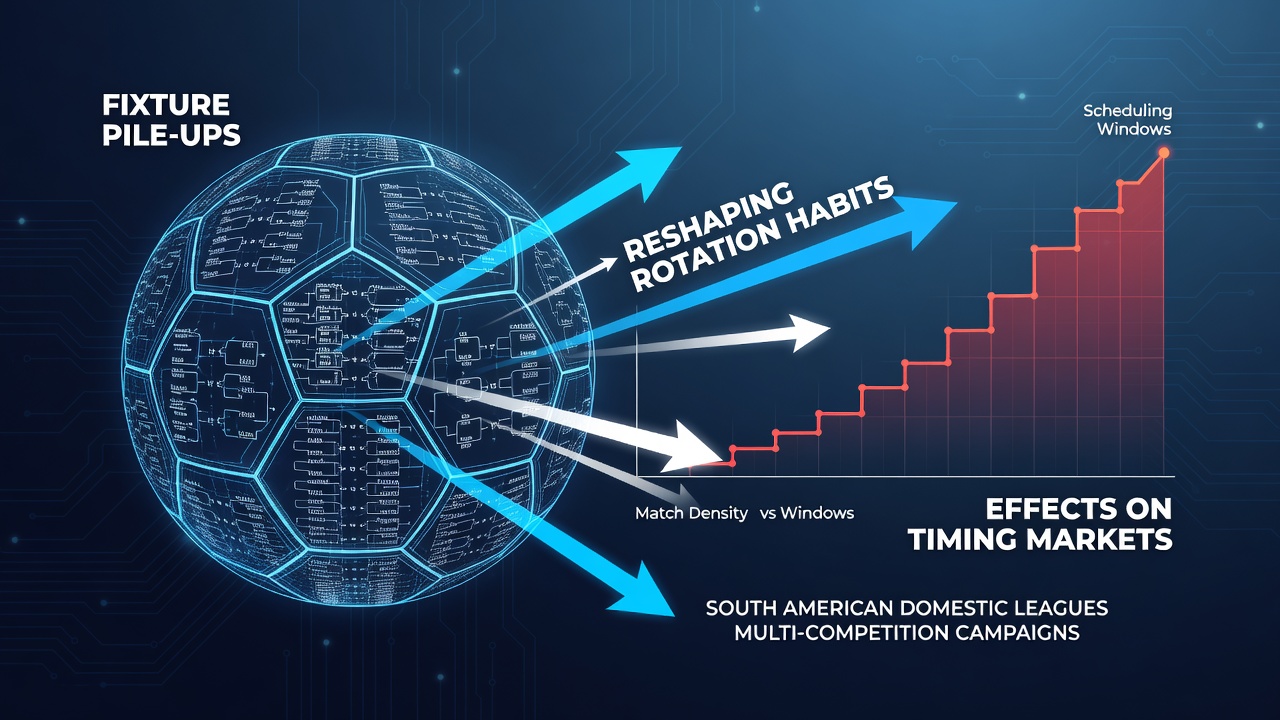
Fixture pile-ups reshaping rotation habits across multi-competition campaigns and their effects on timing markets in South American domestic leagues
Clubs across Brazil's Serie A, Argentina's Primera Division and other South American domestic leagues regularly navigate overlapping domestic cups, continental tournaments and league fixtures that create dense schedules, particularly from June through August each year. Data from CONMEBOL records show that teams participating in both the Copa Libertadores and Copa Sudamericana alongside national competitions often play between 45 and 55 matches per season, compared with 38 to 42 for those focused solely on domestic play. This volume compresses recovery windows and prompts coaches to adjust starting lineups more frequently than in earlier decades.
Patterns of Fixture Congestion in 2026
By July 2026 the calendar places several high-stakes rounds within a three-week span for many clubs, including midweek continental ties followed immediately by weekend league fixtures. Brazilian and Argentine sides report average rest periods of four to five days between such matches, while Chilean and Colombian clubs sometimes face even tighter turnarounds when national cup replays are added. Researchers at the University of São Paulo documented that 68 percent of teams in the 2025 Copa Libertadores group stage altered at least four starting positions from one match to the next when continental and domestic games followed within five days.
Rotation Habits and Squad Management
Managers respond to these demands by rotating players in key positions such as full-backs and central midfielders, preserving energy for decisive fixtures later in campaigns. Statistical tracking from Opta shows that teams averaging more than one match every four days introduce an average of 3.2 new starters per game compared with 1.7 for clubs with clearer schedules. This pattern appears most consistently among Brazilian sides that combine league commitments with continental travel across multiple time zones, whereas Uruguayan and Paraguayan clubs tend to rotate forwards more aggressively when domestic title races tighten.

Effects on Goal Timing Markets
Betting markets that focus on the timing of goals register measurable shifts during congested periods. Figures compiled by regional betting exchanges indicate that matches played within four days of a prior continental fixture produce 12 percent fewer goals in the opening 25 minutes than the seasonal average across Argentine and Brazilian leagues. The same dataset reveals an increase in goals scored between the 70th and 85th minutes, rising from 18 percent of total goals to 24 percent in these compressed windows. Observers note that reduced pressing intensity in early phases and increased substitution activity after the hour mark contribute to these distributions.
League-Specific Variations
Domestic leagues display distinct responses depending on travel distances and squad depth. Brazilian clubs traveling from the south to the northeast for midweek games show the largest rotation swings, while Argentine teams benefit from shorter domestic travel yet still adjust lineups when Copa Sudamericana ties overlap with league derbies. Colombian and Ecuadorian sides report intermediate rotation rates, with midfielders receiving the most frequent rest. These patterns hold across the first half of 2026, according to league performance reports released by national federations.
Market Adjustments and Data Trends
Timing markets adapt as bookmakers incorporate historical rotation data into odds compilation. Exchanges record higher trading volumes on under-2.5-goal segments in the first half when fixture lists show three matches in eight days for one or both sides. Live odds also shift more sharply after halftime in these scenarios, reflecting observed increases in late-game tempo once fresh substitutes enter. Academic papers from the Pontifical Catholic University of Chile highlight correlations between squad rotation frequency and changes in expected goal timing, though causation remains under further study.
Conclusion
Fixture pile-ups continue to influence both on-field rotation decisions and the structure of timing-based betting markets in South American domestic leagues. As multi-competition calendars remain dense through 2026, patterns of squad management and goal distribution provide consistent data points for analysis across Brazil, Argentina and neighboring countries.