How Fixture Density Alters Rotation Patterns and Scoring Averages in CONCACAF League Play During Packed International Windows
Written by Paul Klein · Jun 7, 2026
How Fixture Density Alters Rotation Patterns and Scoring Averages in CONCACAF League Play During Packed International Windows
CONCACAF league schedules compress multiple domestic fixtures into short periods when national team windows open, and this fixture density forces clubs across Liga MX, MLS, and Central American competitions to adjust player availability and match preparation. International dates in 2025 and into June 2026 pull senior players away for World Cup qualifiers and Nations League matches, leaving domestic calendars to absorb the resulting backlogs without extending the season length. Teams therefore face consecutive midweek and weekend games that overlap with recovery cycles shortened by travel across time zones and climates.
Fixture Scheduling Patterns in CONCACAF Domestic Leagues
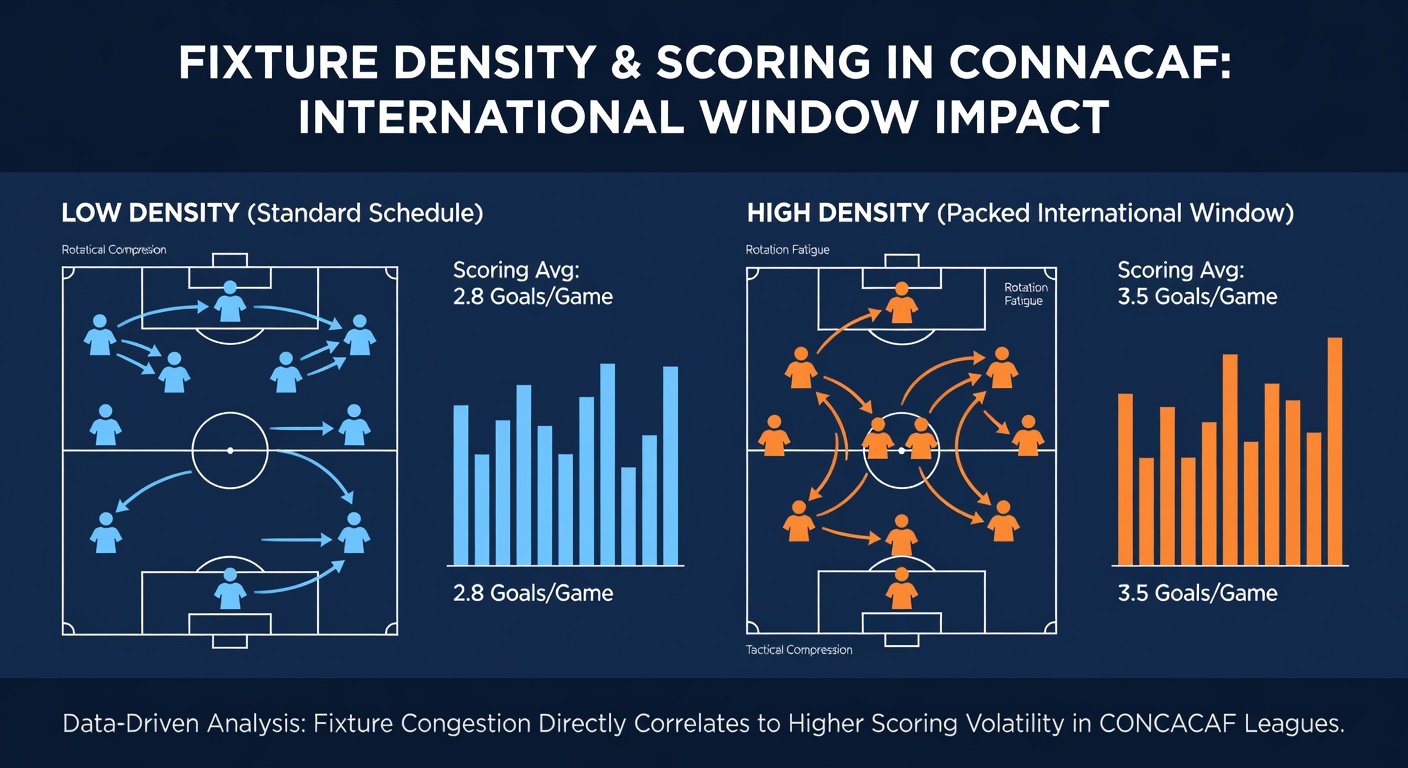
League administrators reschedule postponed matches into existing slots once FIFA windows close, and data compiled by CONCACAF competition reports show an average increase of 1.8 fixtures per team within any 21-day block following a March or June international break. Liga MX clubs recorded 14 instances of three-game weeks in the 2024-2025 Clausura after the October window, while MLS teams navigated similar clusters during the summer period ahead of 2026 World Cup preparations. Central American leagues such as Liga Nacional de Honduras and Liga FPD in Costa Rica absorb additional games because their seasons align directly with CONCACAF club tournaments that continue through national team absences.
Rotation Strategies Adopted by Coaching Staffs
Coaches respond to fixture density by expanding squad rotation beyond standard injury or suspension management, and tracking data from Opta and league performance centers indicate that starting lineups change by an average of 4.2 players per match during congested periods compared with 2.7 players in standard weeks. Mexican clubs often rest designated starters who return from national duty on the third day after an international match, while MLS sides integrate academy prospects into defensive lines earlier in sequences of three matches in eight days. Rotation extends to goalkeepers in some cases, and Central American teams frequently rely on dual-nationality players who miss fewer windows because their national federations schedule fewer friendlies.
Measured Changes in Scoring Averages
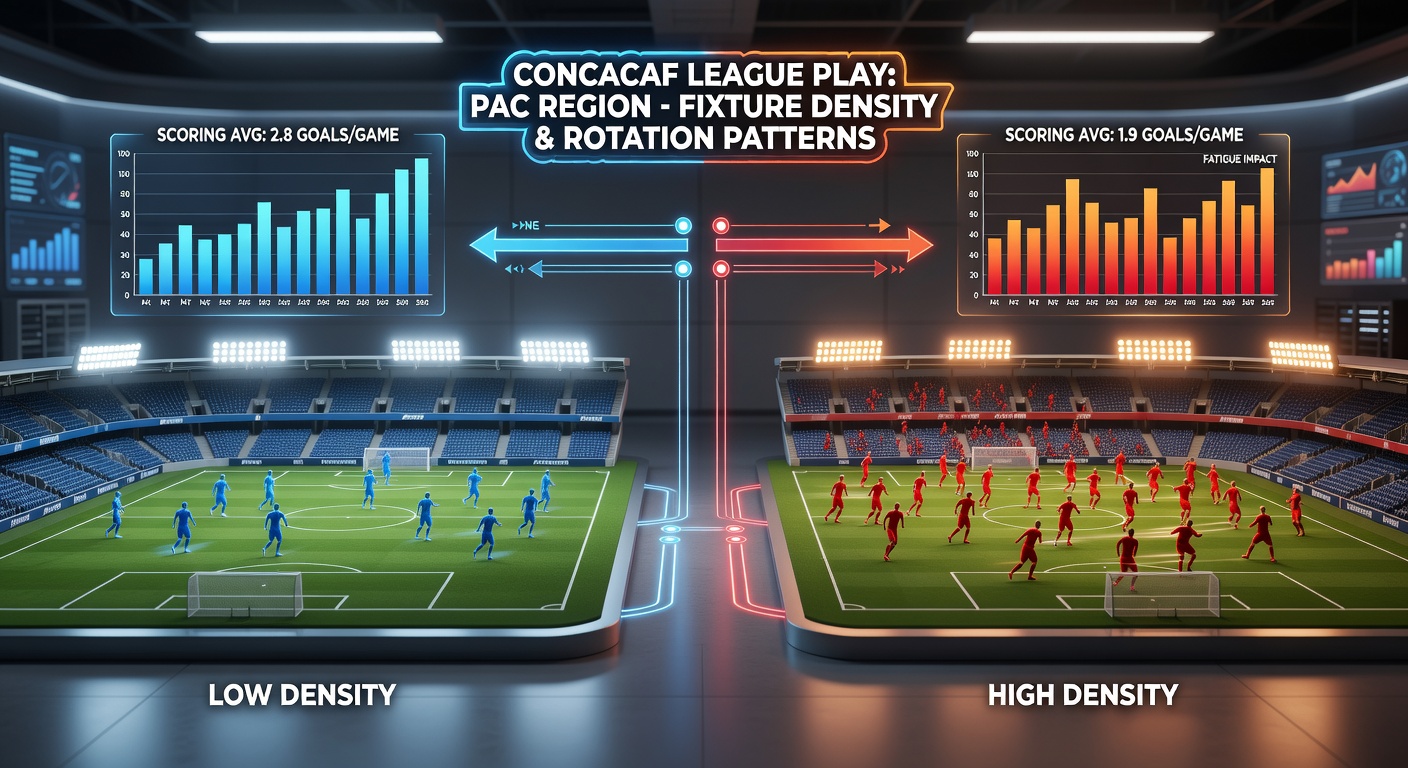
Scoring rates shift measurably when fixture density rises, and aggregate statistics released by the MLS and Liga MX statistical departments reveal that goals per game increase by 0.31 during the first two weeks after an international window compared with the season-long average. The rise correlates with reduced training time for returning players and increased minutes for less match-fit substitutes, which in turn produces more transitional play and defensive lapses. In CONCACAF Champions Cup ties played immediately after June windows, the average climbs further to 3.4 goals per match across the 2023-2025 editions, according to official tournament summaries. Lower-scoring outcomes appear later in congested blocks once squads stabilize, yet the initial spike remains consistent across multiple seasons.
Regional Variations Across CONCACAF Territories
North American clubs experience different rotation demands than Central American sides because travel distances and climate contrasts add recovery variables, and Canadian Premier League teams show the largest increase in substitute usage during summer windows when heat indexes exceed 30 degrees Celsius. Mexican sides manage altitude effects when matches move between sea-level venues and highland stadiums within the same week, while Caribbean clubs contend with hurricane-season flight disruptions that further compress preparation time. Researchers at the University of Costa Rica documented that teams traveling more than 1,500 kilometers post-window record 12 percent fewer completed passes in the opening 30 minutes of the next domestic fixture.
Impact on Player Workload and Substitution Patterns
Minutes logged by players who participate in both club and national team matches rise sharply during dense periods, and GPS data shared in joint reports by CONCACAF and participating leagues indicate that total distance covered per 90 minutes drops by 8 percent for returning starters in their first club appearance. Substitution windows open earlier, often before the 60th minute, and teams average 4.8 changes per match instead of the usual 3.2. This pattern holds across forward, midfield, and defensive positions, although fullbacks receive the highest proportion of early rests because overlapping wing play in international matches accelerates fatigue in those roles.
Conclusion
Fixture density created by international windows produces measurable adjustments in rotation depth and goal output across CONCACAF domestic competitions, and these adjustments follow consistent patterns documented in league performance data through 2025 and into the June 2026 cycle. Clubs that maintain larger, balanced squads and structured recovery protocols limit the variance in scoring, while those with thinner rosters encounter greater fluctuation in results during the immediate post-window weeks. Observers continue to monitor how the 2026 World Cup hosting cycle will influence scheduling density in the years ahead, yet current figures already establish clear relationships between fixture compression, rotation volume, and scoring shifts.