How Pitch Degradation Timelines Reshape Over/Under Lines in County Cricket Championship Encounters
Written by Parker Frank · Jun 28, 2026
How Pitch Degradation Timelines Reshape Over/Under Lines in County Cricket Championship Encounters
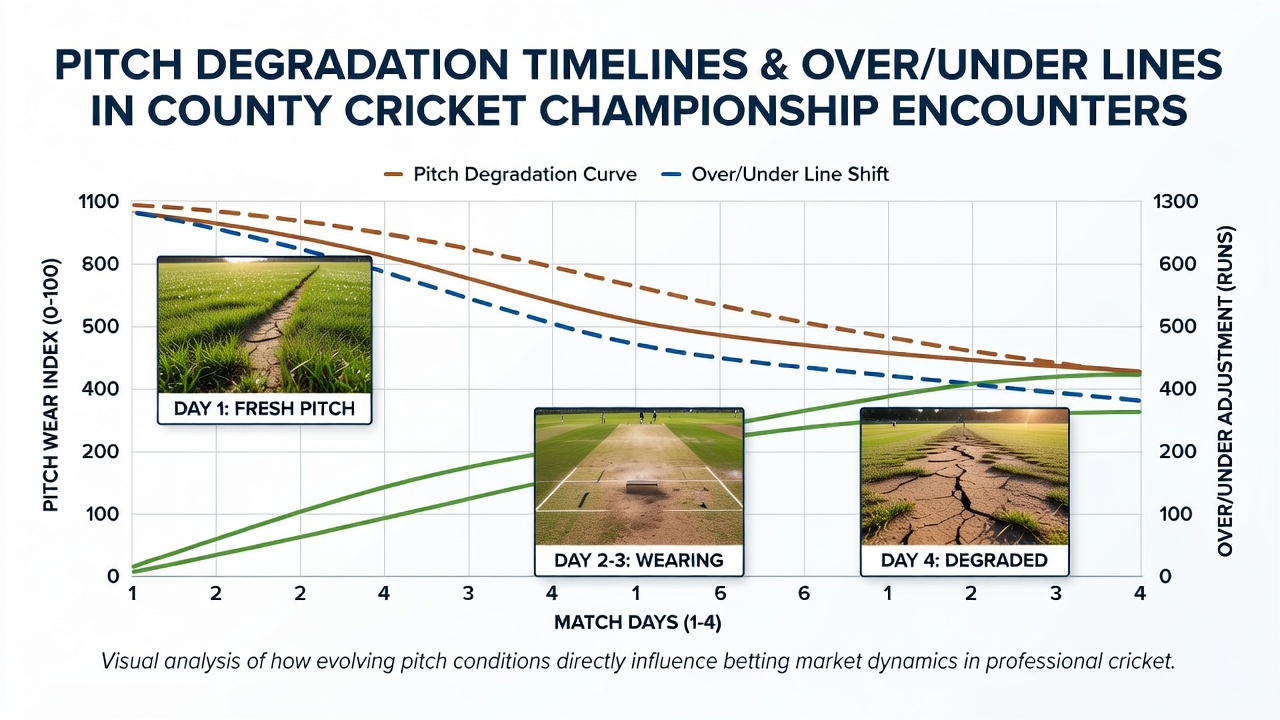
County Championship matches unfold over four days and pitch surfaces change in predictable ways that directly influence total run lines offered by betting operators. Fresh pitches on day one typically produce higher scoring rates while progressive wear introduces variable bounce and increased spin which tends to suppress aggregates later in the game. Observers note these timelines create measurable shifts in over/under markets particularly when captains win tosses and elect to bat or bowl first based on expected deterioration rates.
Understanding the Four-Day Pitch Cycle
Data from domestic first-class fixtures shows that grass cover and moisture retention determine how quickly surfaces break down with most venues reporting significant changes between days two and three. Early in matches the ball tends to come onto the bat evenly allowing batsmen to accumulate runs at steady rates but as the pitch dries and cracks emerge spinners gain purchase while seam movement becomes less predictable. Those who've tracked Championship statistics over multiple seasons confirm that average runs per wicket decline noticeably after the halfway mark and this pattern holds across different grounds from Lord's to Headingley.
June 2026 fixtures already scheduled by the England and Wales Cricket Board include several high-profile clashes where weather forecasts suggest faster degradation because of warmer temperatures and lower rainfall expectations. Teams preparing for these encounters study historical pitch reports to anticipate when surfaces will turn and adjust their declarations or run-chase strategies accordingly. Such preparation feeds into pre-match line setting because operators incorporate degradation models when establishing totals for each innings.
Scoring Patterns and Market Adjustments
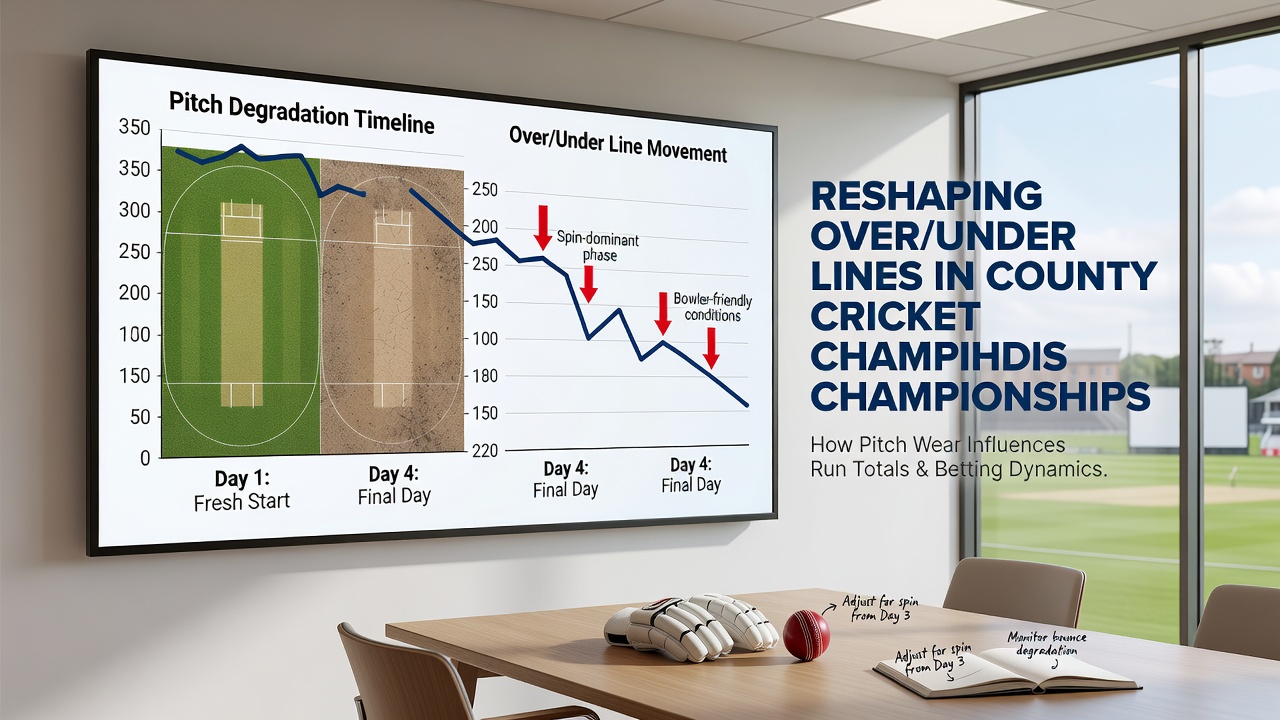
Research conducted by sports analytics groups reveals that first-innings totals on day one often exceed 350 runs on flat tracks yet drop below 280 once the third day begins. This progression creates opportunities for under bets in later stages while over lines remain viable only if teams declare early or face weak attacks. Bookmakers respond by tightening totals progressively during matches and live adjustments reflect real-time pitch assessments provided by umpires and grounds staff.
Take one recent example where Lancashire hosted Yorkshire at Old Trafford and the surface started with good carry yet by tea on day three offered sharp turn to the slow bowlers. Totals that opened at 310 for each innings were revised downward as evidence of wear accumulated and under wagers found value once the pattern became clear. Similar dynamics appear in other divisions where slower pitches at Taunton or Chelmsford accelerate the process and compress scoring windows even further.
Regional Variations Across Venues
Not every ground follows identical timelines because soil composition and drainage systems differ between counties. Southern venues with heavier clay content retain moisture longer while northern grounds dry quicker under wind exposure and this geographic spread produces distinct betting profiles. Analysts at the International Cricket Council have documented these differences through standardized pitch monitoring protocols that member boards apply during domestic seasons.
Coastal locations add another layer when sea air accelerates surface cracking and teams scheduled to play there in late spring or early summer adjust their preparations. Data compiled by Cricket Australia on comparable first-class surfaces shows parallel wear patterns that support cross-hemisphere comparisons although direct application remains limited by differing ball regulations.
Strategic Responses from Teams and Operators
Captains who read the pitch accurately gain advantages when setting fields or choosing when to declare and these decisions ripple through over/under calculations. Sides batting fourth on deteriorating surfaces frequently struggle to reach targets because the ball turns more sharply and edges carry less distance to fielders. Operators factor such probabilities into their models and lines tighten accordingly once the match reaches day three or four.
Teams with strong spin attacks benefit most from extended timelines whereas pace-heavy lineups prefer fresher conditions. This matchup element adds another variable because selectors weigh bowler availability against expected pitch states when naming squads for upcoming rounds. The resulting personnel choices influence expected aggregates and feed back into market pricing well before play begins.
Conclusion
Pitch degradation timelines in the County Championship create consistent yet venue-specific effects on total run markets and operators continue refining models to reflect these realities. Teams that study historical data and current conditions gain edges when navigating four-day encounters while lines adjust in real time as surfaces evolve. The interplay between weather, soil type and tactical decisions ensures that over/under outcomes remain tied to the physical state of the playing surface throughout each match.