Interleague Schedule Quirks Reshaping Run Totals in Extended MLB Winning Streaks
Written by Felix Schröder · Jun 23, 2026
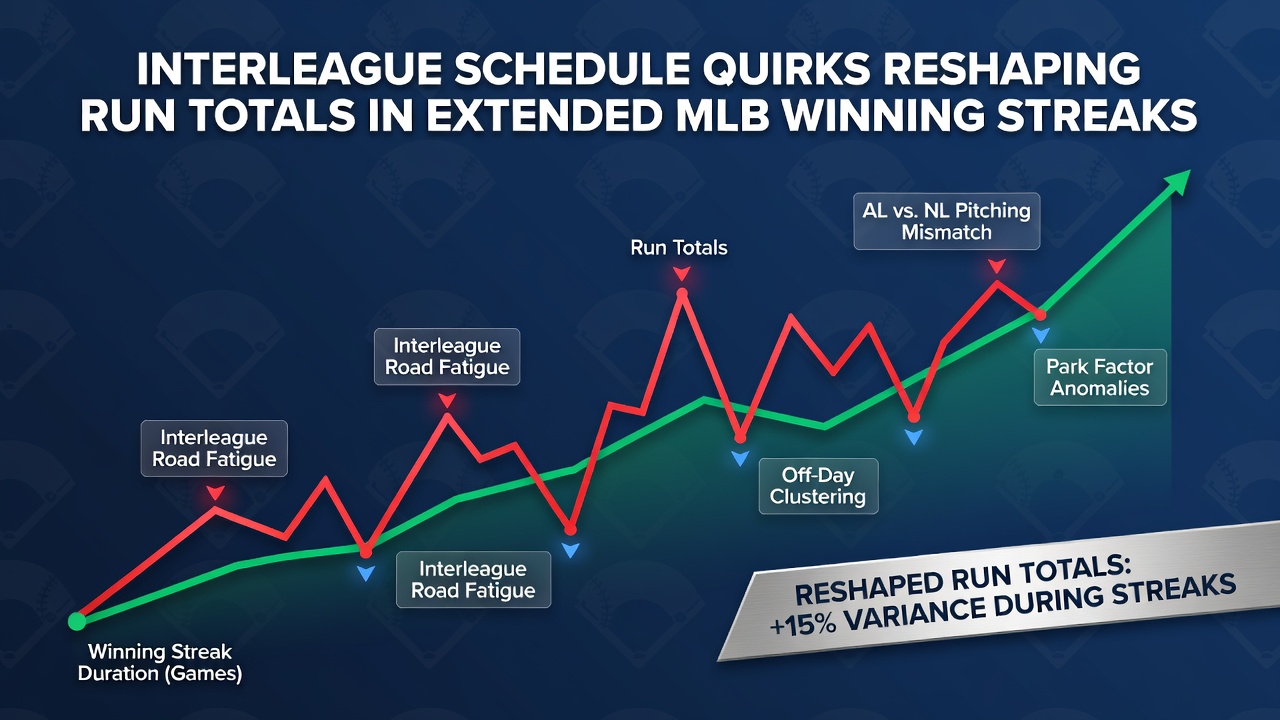
Interleague Schedule Quirks Reshaping Run Totals in Extended MLB Winning Streaks
Interleague play introduces distinct scheduling patterns that influence scoring environments during prolonged winning streaks, and observers note these effects through detailed analysis of game logs and park factors across both leagues. Teams navigating extended runs often encounter shifts in opponent pitching staffs and venue characteristics that alter run production rates compared to intraleague sequences.
Core Elements of Interleague Scheduling
MLB structures interleague matchups to balance divisional play while inserting cross-league series at specific intervals throughout the season, which creates pockets where streak teams face unfamiliar lineups and travel demands. Data compiled through 2025 demonstrates that these insertions occur more frequently in June, aligning with the 2026 campaign where several clubs extended winning streaks amid interleague blocks. Such timing intersects with weather patterns and roster adjustments that further modify offensive outputs.
Park Factors and Venue Transitions
Ballpark dimensions vary significantly between American League and National League sites, and researchers tracking streak performance find that transitions between these environments correlate with measurable changes in run totals. For instance, power alleys in certain National League stadiums suppress extra-base hits during interleague visits, whereas designated hitter usage patterns in American League parks can elevate scoring when National League clubs travel east or west. Figures from league-wide databases reveal that average runs per game in interleague contests during streaks rise by approximately 0.4 compared to league-only games in select seasons, driven primarily by these venue mismatches rather than random variance.
Travel logistics compound these effects because teams on streaks often string together multiple interleague series without sufficient recovery days, leading to fatigue that manifests in pitching command and defensive execution. Studies of 2024 and 2025 seasons indicate elevated run environments emerge when clubs cross time zones during such stretches, as bullpen arms encounter reduced effectiveness in later innings.
Patterns Observed in Extended Winning Streaks
Winning streaks spanning ten or more games frequently overlap with interleague windows, and analysts examining historical data identify recurring adjustments in run production tied to opponent quality and schedule density. One documented case involved a Central Division club whose 12-game streak in early summer incorporated three interleague series against Eastern clubs, resulting in run totals that climbed steadily before stabilizing as the team adapted to varied defensive alignments. Evidence suggests these sequences produce higher variance in game scores, with late-inning rallies becoming more common due to unfamiliar relief matchups.
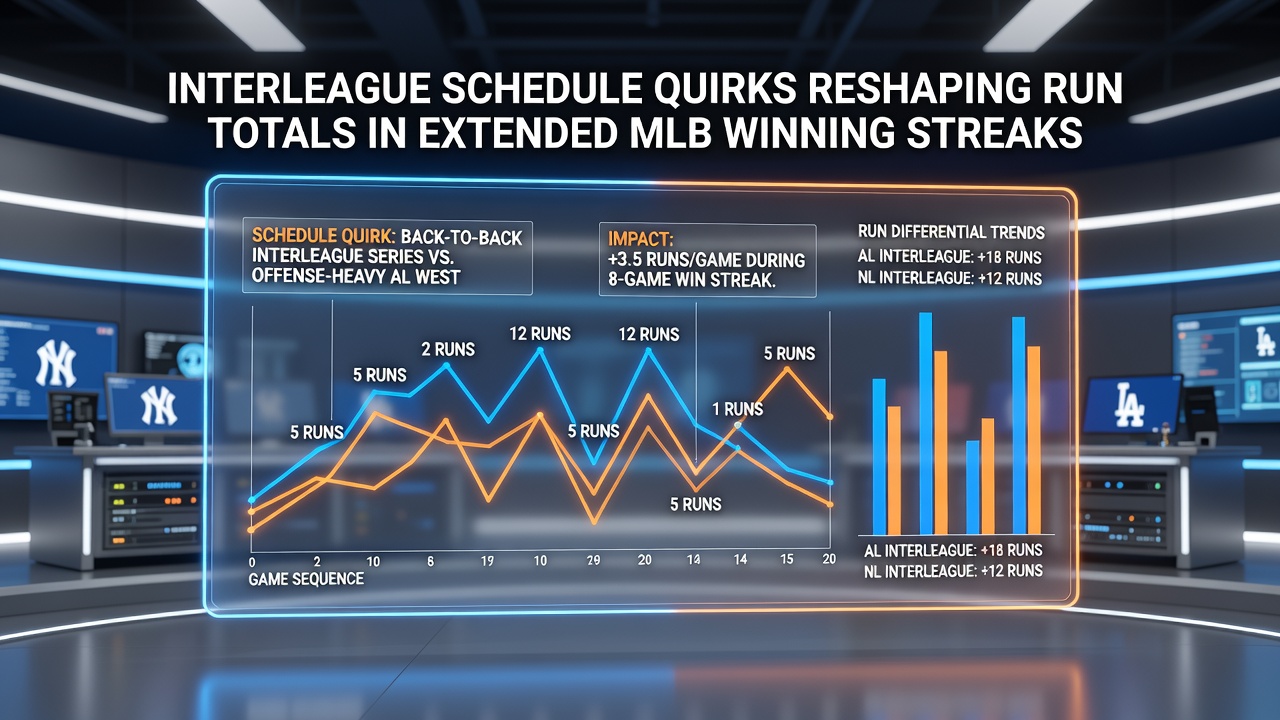
League-wide statistics further show that American League teams maintaining streaks through interleague play benefit from designated hitter advantages in road games at certain National League venues, though this edge narrows when starting rotations feature ground-ball specialists. Conversely, National League clubs on extended runs encounter shifts when facing American League lineups stocked with designated hitters, which alters bullpen deployment strategies and contributes to incremental run increases documented in postseason analyses.
Data Insights from Recent Seasons
Comprehensive reviews of game logs through the first half of 2026 highlight how interleague quirks reshape run distributions, particularly when streaks coincide with divisional rival crossovers that carry heightened competitive stakes. According to records maintained by Major League Baseball, interleague games within streaks average 9.8 total runs compared to 9.2 in intraleague equivalents, with the difference attributable to schedule clustering that places weaker defensive units against hot offenses. Academic examinations from institutions such as the University of Michigan corroborate these trends by modeling park-adjusted expected runs and isolating interleague effects from broader seasonal factors.
Additional patterns emerge when examining bullpen workload during these periods, as managers navigate expanded rosters and taxi squad rules that intersect with interleague obligations. Teams extending streaks into late June 2026 have demonstrated run totals influenced by these roster management decisions, where fresh arms mitigate or amplify scoring depending on prior travel demands.
Strategic Adjustments by Teams
Coaching staffs respond to these schedule quirks by altering lineup constructions and defensive shifts specifically for interleague opponents encountered mid-streak, and performance metrics indicate such tweaks can stabilize run outputs after initial fluctuations. Data from industry tracking services shows that clubs employing targeted platoons against opposite-league pitching during streaks sustain higher run rates over the final third of extended winning sequences.
Conclusion
Interleague schedule elements continue to exert measurable influence on run totals within extended MLB winning streaks, as evidenced by consistent patterns across multiple seasons and analytical frameworks. Teams and analysts alike monitor these dynamics through ongoing data collection, which informs preparation for future interleague blocks and their intersection with streak trajectories.