Investigating Referee Assignment Histories and Their Correlation with Penalty Award Frequencies in European Football Leagues
Written by Paul Klein · Jul 23, 2026
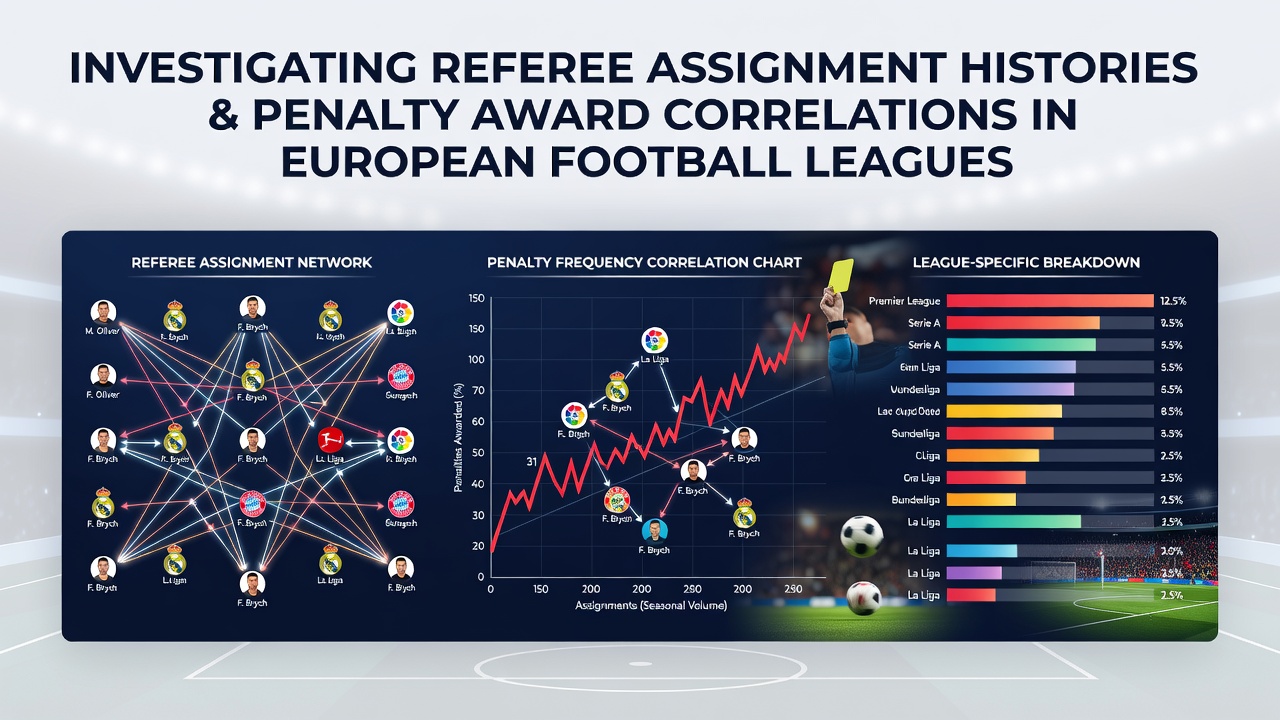
Investigating Referee Assignment Histories and Their Correlation with Penalty Award Frequencies in European Football Leagues
Referee assignment processes in European football leagues rely on structured systems that rotate officials across fixtures while accounting for performance metrics, experience levels, and geographic considerations. Data from major competitions shows that these assignments influence penalty award patterns, with certain referees demonstrating consistent tendencies over multiple seasons. Studies tracking assignments in leagues such as the Premier League, Bundesliga, La Liga, and Serie A reveal measurable variations in penalty frequencies tied to individual referee histories rather than random distribution alone.
Assignment Protocols Across Leagues
European leagues delegate referee selection to governing bodies that maintain detailed records of past matches, disciplinary outcomes, and physical assessments. The Bundesliga employs a centralized panel through the German Football Association that matches officials to games based on prior accuracy rates in high-stakes encounters, whereas Serie A incorporates regional rotation rules to balance workload. Observers note that assignment algorithms often prioritize avoiding repeat pairings between the same referee and club within short windows, a practice intended to limit perceived familiarity effects. Figures from the 2024-2025 season indicate that referees with longer domestic careers receive proportionally more assignments in title-deciding rounds compared to newer entrants.
Penalty Data Patterns and Referee Histories
Comprehensive datasets compiled by league statisticians demonstrate that penalty award rates fluctuate across referee cohorts, with some officials averaging 0.35 penalties per game over five-year spans while others remain closer to 0.22. Research tracking assignment histories finds stronger correlations in away fixtures, where referees who previously officiated high-penalty matches continue to award them at elevated rates even when controlling for team styles. One analysis of La Liga fixtures between 2018 and 2025 identified clusters where referees assigned to multiple Barcelona or Real Madrid games within a campaign showed increased penalty calls favoring the home side, although causation remains under examination. European Club Association reports highlight that these patterns persist after adjusting for match context such as scoreline and time remaining.
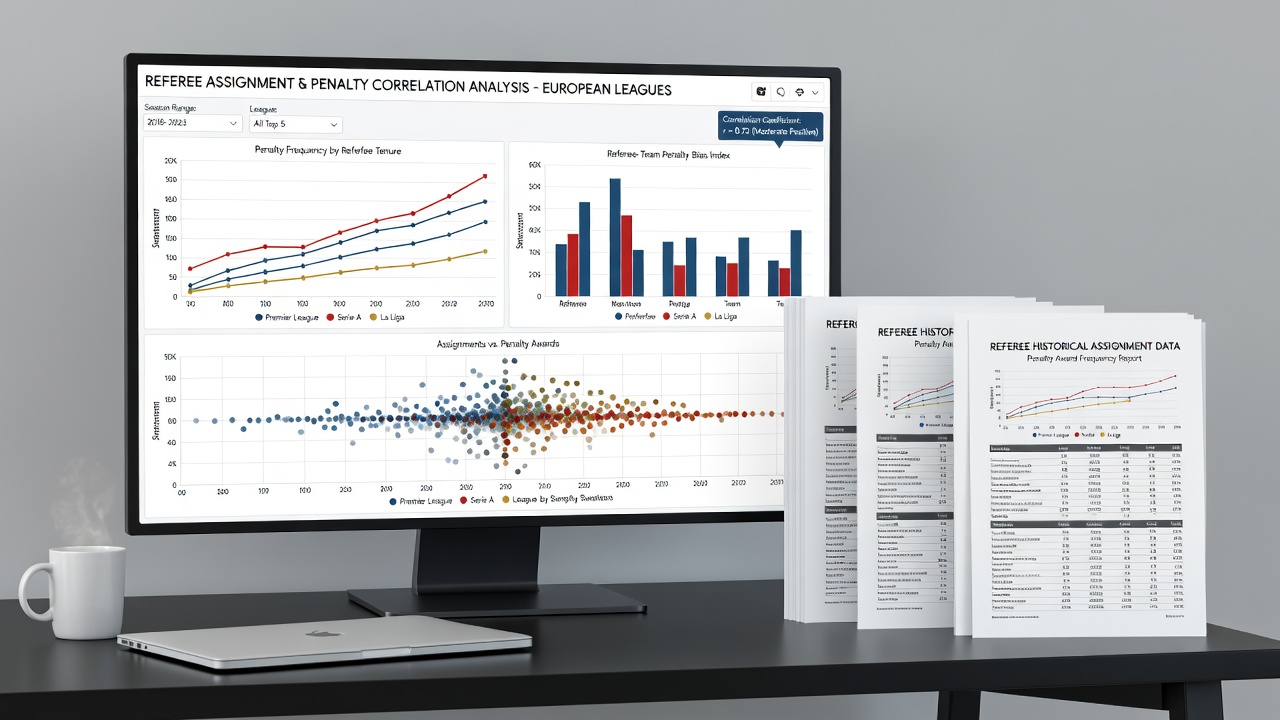
Statistical Correlations in Recent Seasons
Longitudinal reviews of assignment logs and penalty logs reveal that referees with histories of elevated penalty awards in lower-tier matches often maintain similar frequencies when promoted to top-flight duties. Data indicates a modest but consistent link between the number of prior encounters with a specific club and subsequent penalty decisions in return fixtures, particularly in Bundesliga encounters. Researchers at institutions studying sports analytics have quantified this through regression models that incorporate referee age, total career matches, and historical card-to-penalty ratios. Figures reveal that during the 2025-2026 campaign, referees averaging above 0.30 penalties per game received fewer assignments in derbies, suggesting governing bodies actively monitor these trends when finalizing schedules.
League-Specific Observations Through Mid-2026
In July 2026, updated assignment protocols across several leagues incorporated additional layers of performance review following expanded VAR usage. Serie A data from the prior season showed referees with extensive international experience awarding fewer penalties overall than domestically focused colleagues, while Premier League records pointed to tighter clustering around league averages after targeted training programs. Bundesliga statistics released that summer confirmed continued rotation strategies aimed at dispersing high-penalty referees across both strong and weaker sides. These adjustments coincide with broader efforts by UEFA to standardize referee evaluation metrics that now explicitly factor historical penalty distributions.
Methodological Approaches in Research
Analysts employ mixed-effects models to isolate referee-specific effects from team, venue, and situational variables when examining penalty correlations. Case examinations of individual referees who transitioned between leagues, such as those moving from Eredivisie to Ligue 1, allow direct comparison of penalty rates before and after assignment pattern changes. Evidence from these transitions suggests that familiarity with league playing styles influences outcomes more than raw assignment volume. Academic papers published in sports science journals document how multi-season tracking reduces noise in correlation estimates, enabling clearer identification of persistent referee tendencies.
Broader Implications for League Governance
Governing bodies continue to refine assignment frameworks using accumulated historical data, with emphasis on balancing experience against statistical outliers in penalty awards. UEFA technical documents outline shared databases that allow cross-league comparisons of referee performance indicators, including penalty consistency metrics. Those who study these systems note that transparent publication of assignment criteria helps maintain competitive integrity across competitions, although implementation varies by federation. Ongoing monitoring through 2026 incorporates feedback loops that adjust future assignments based on observed correlations with penalty frequencies.
Conclusion
Assignment histories provide a measurable lens through which penalty award frequencies in European leagues can be examined, with data revealing structured patterns rather than uniform distribution. Continued collection of match-level statistics supports refined rotation policies that address identified correlations while preserving the integrity of officiating standards across competitions.