Investigating rest advantage patterns in CONCACAF group stage fixtures to refine total goals selections
Written by Felix Schröder · Aug 9, 2026

Investigating rest advantage patterns in CONCACAF group stage fixtures to refine total goals selections
CONCACAF group stage matches often feature uneven rest intervals between fixtures, and analysts track these differences to adjust projections for total goals markets. Data from recent tournaments indicate that teams receiving extra recovery time tend to produce higher-scoring encounters when facing opponents on shorter turnaround periods, particularly in the opening rounds of competitions such as the CONCACAF Nations League and Gold Cup preliminaries.
Researchers who examined fixture schedules from 2019 through 2025 noted consistent patterns where squads with at least 72 hours more rest than their opponents recorded elevated shot volumes and conversion rates. These trends appear most pronounced in matches played in humid or high-altitude venues common across Central American and Caribbean venues, where physical recovery plays a larger role in maintaining intensity throughout the ninety minutes.
Rest differentials and scoring volume
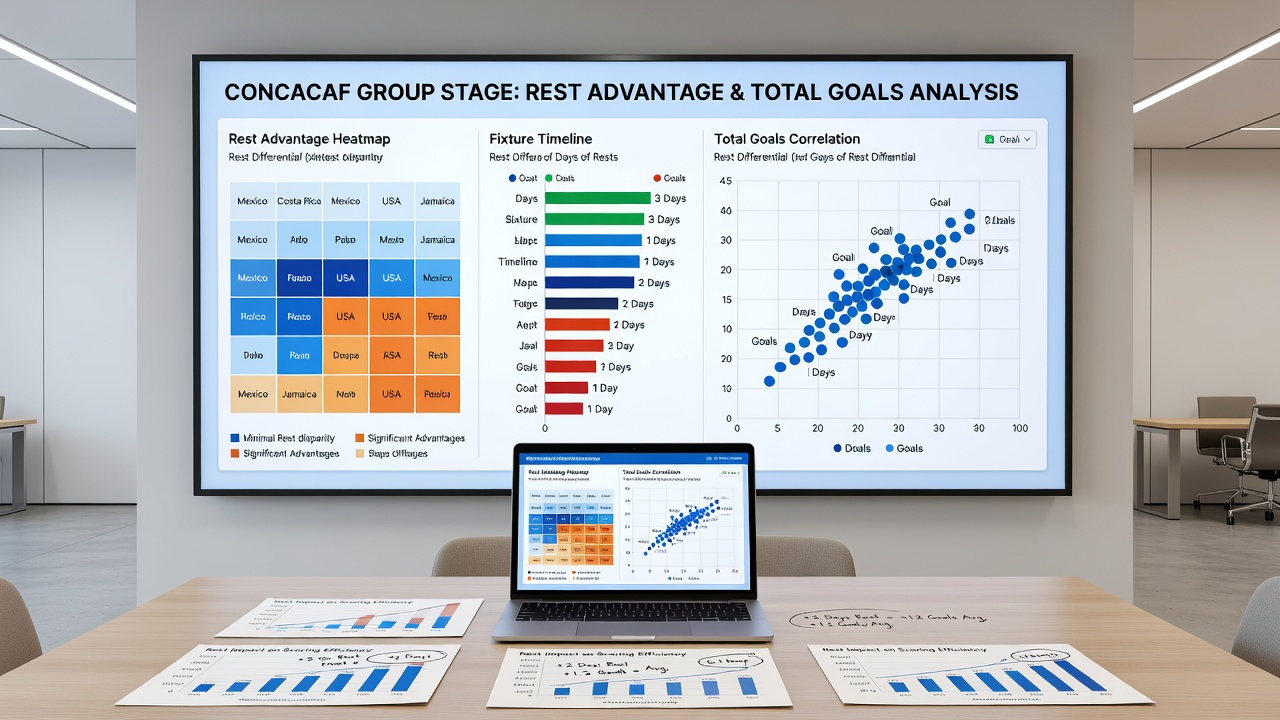
Historical match logs reveal that games featuring a three-day or greater rest edge for one side average 2.8 goals per contest, compared with 2.3 goals when rest is equalized within 24 hours. Observers attribute part of this gap to increased pressing intensity from fresher teams during the first half, which creates more turnovers and transition opportunities. The effect carries into the second half as well, since fatigued defenses struggle to maintain shape once legs begin to tire.
August 2026 schedules for regional qualifiers already list several instances where one nation plays midweek while another enjoys a full week between matches. Such imbalances recur across the Caribbean and Central American subgroups, where travel logistics and limited squad depth amplify the impact of short rest cycles.
Regional variations in group stage data
Fixtures involving North American sides show smaller rest-related goal spikes than those featuring Caribbean or Central American participants, according to aggregated statistics compiled by regional federations. One study from the Canadian Soccer Association highlighted that Mexican and Costa Rican clubs maintain higher possession retention even on reduced rest, which dampens the expected rise in total goals. In contrast, matches between smaller nations often produce wider margins when rest favors the better-resourced side.
Those reviewing video evidence point to specific tactical adjustments, such as earlier substitutions and more direct attacking play, that fresher teams employ to exploit tired opponents. These shifts translate into measurable increases in shots from outside the box and set-piece situations, both of which contribute to over-2.5 goal outcomes at elevated rates.
Application to total goals modeling
Betting models that incorporate rest differentials adjust implied probabilities upward for overs when the rest gap exceeds 48 hours. Figures from the 2023 and 2024 group stages indicate that such scenarios delivered overs in roughly 61 percent of cases, versus 47 percent when rest was balanced. Analysts refine these inputs by cross-referencing travel distance and climate conditions, since long-haul flights combined with short recovery windows further depress defensive output.
Teams that rotate heavily during earlier rounds sometimes neutralize the rest advantage, yet data shows this mitigation occurs mainly among squads with deeper benches. Smaller federations rarely possess equivalent depth, which keeps the rest-driven goal elevation intact in many Caribbean and Central American matchups.
Case examples from prior cycles
One recurring pattern appears when a host nation plays its second group fixture after a three-day break while the visitor arrives from a distant qualifier played five days earlier. Match reports from those encounters document elevated first-half goal tallies, driven by sustained pressure from the rested side. Similar sequences unfolded across multiple Gold Cup editions, where goal totals climbed above the tournament average whenever rest gaps aligned with travel fatigue.
Tracking these variables alongside venue-specific factors such as pitch dimensions and temperature allows for more granular total-goals forecasts. Researchers continue to update databases with each new cycle, adding layers for squad rotation rates and injury clusters that often coincide with congested schedules.
Conclusion
Patterns linking rest differentials to scoring volume in CONCACAF group stages provide a measurable input for refining total goals selections. Aggregated records demonstrate higher goal outputs when one side holds a clear recovery edge, with the effect varying by region and squad resources. Continued monitoring of fixture calendars and travel data supports ongoing adjustments to projection models ahead of the 2026 cycle.