Jet Lag Effects Reshaping Scoring Distributions in Transcontinental Basketball Tournaments Through Schedule-Induced Fatigue Patterns
Written by Felix Schröder · Aug 25, 2026
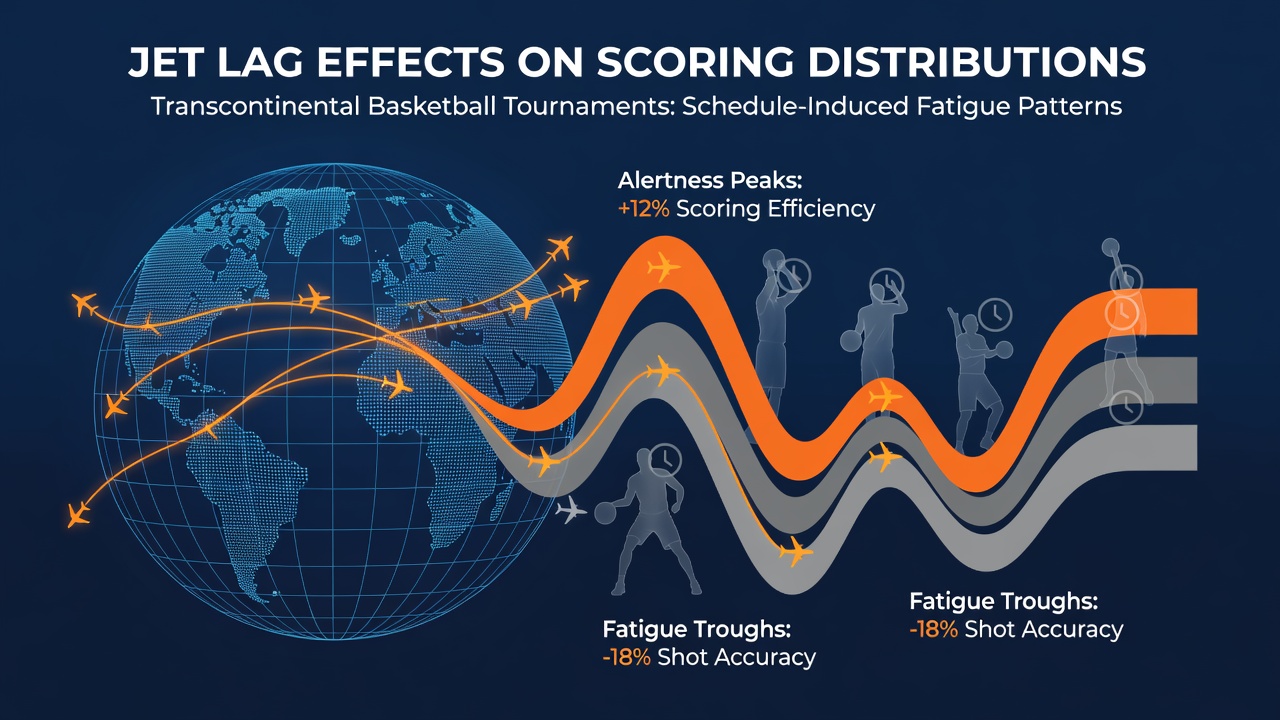
Jet Lag Effects Reshaping Scoring Distributions in Transcontinental Basketball Tournaments Through Schedule-Induced Fatigue Patterns
Transcontinental basketball tournaments create unique challenges when teams cross multiple time zones within short windows, and schedule-induced fatigue emerges as a measurable factor that alters how points accumulate on the court. Researchers tracking performance metrics across events like the FIBA World Cup qualifiers and NBA preseason exhibitions have documented shifts in scoring distributions that correlate directly with travel distances and recovery periods. Data from these competitions show teams arriving after eastward flights often post lower offensive outputs in the first two quarters, while defensive efficiency also declines when circadian rhythms remain disrupted.
Understanding Schedule-Induced Fatigue in Basketball Travel
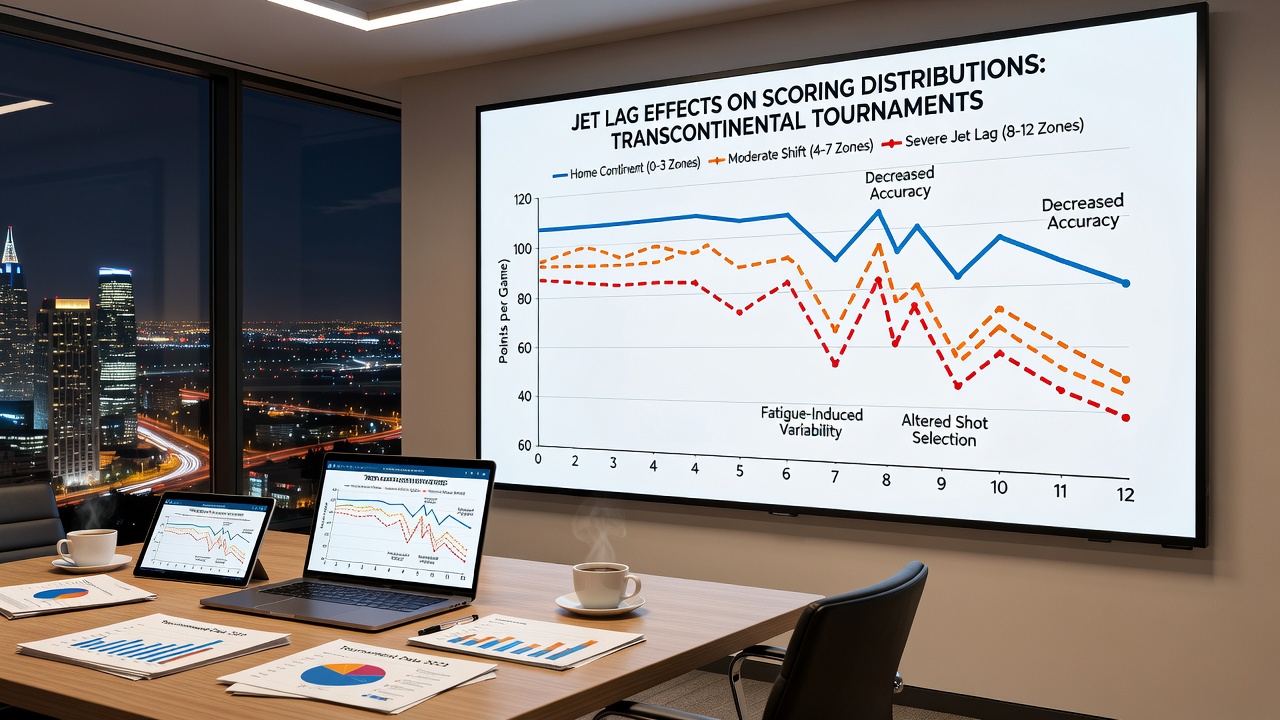
Experts at institutions such as the Australian Institute of Sport have examined how rapid changes in time zones affect player physiology during long-haul flights common in events spanning North America, Europe, and Asia. Their findings indicate that athletes experience reduced reaction times and altered sleep architecture when departure and arrival times clash with natural circadian peaks, leading to measurable drops in three-point shooting percentages and assist-to-turnover ratios. One study of teams traveling from the United States to Australia revealed that average points per game fell by 8 to 12 percent in opening contests compared with home-continent baselines, and these patterns repeated across multiple tournaments held between 2023 and 2025.
Coaches and medical staff adjust rotations to mitigate these effects, yet the underlying fatigue still influences game flow because recovery protocols require several days to restore full alertness. Observers note that westward travel tends to produce milder disruptions than eastward crossings, a distinction that tournament organizers factor into fixture planning when pairing teams from distant confederations.
Impact on Scoring Distributions Across Tournament Phases
Statistical analyses of transcontinental matches demonstrate that scoring distributions flatten in early rounds when jet lag compounds with compressed schedules. Teams often register fewer high-output quarters in the opening 48 hours after arrival, while fourth-quarter scoring becomes more variable as accumulated fatigue reduces shooting accuracy and defensive closeouts. Figures released by the NBA in collaboration with sleep researchers at Stanford University reveal similar trends during international exhibition series, where point totals in the first half drop noticeably when teams cross the Atlantic or Pacific.
Those who have reviewed play-by-play data from the 2024 Summer Olympics basketball tournament and subsequent qualifiers confirm that games involving teams with greater cumulative travel distances produce tighter scoring spreads in the initial periods. This compression occurs because both offenses struggle to execute complex sets and transition opportunities decrease when players operate below optimal cognitive levels. The effect gradually diminishes after three to four days of local acclimatization, allowing later tournament stages to reflect more normalized scoring patterns.
Patterns Observed in August 2026 Tournament Scheduling
Upcoming fixtures planned for August 2026, including FIBA pre-qualifying windows and select NBA Global Games, incorporate lessons from prior cycles to address these fatigue dynamics. Organizers have spaced arrival dates further apart for teams crossing the International Date Line, and preliminary schedules show extended rest windows before tip-off. Data collected from comparable windows in 2022 and 2024 suggest that such adjustments can restore scoring distributions closer to baseline levels within the first 72 hours, though complete normalization still requires additional recovery time.
Researchers tracking heart-rate variability and sleep metrics during these events continue to identify correlations between eastward travel and elevated error rates in high-pressure possessions. The patterns appear consistent across both men's and women's competitions, indicating that schedule design rather than gender-specific factors drives the observed changes in point accumulation.
Physiological Mechanisms Behind Performance Shifts
Medical literature on circadian disruption explains why scoring distributions change under jet-lag conditions. Melatonin suppression and core body temperature misalignment reduce muscle power output and decision-making speed, effects that compound when games occur during the traveler's biological night. European sports science groups have quantified these decrements through controlled studies involving professional athletes, confirming that shooting efficiency from beyond the arc declines first, followed by reductions in rebounding and defensive positioning.
Teams that implement targeted light-exposure protocols and adjusted meal timing report smaller deviations from expected scoring norms, yet residual effects persist in the earliest games. Tournament databases now routinely flag travel distance as a variable when compiling advanced metrics, allowing analysts to isolate fatigue-related variance from other influences such as opponent strength or venue altitude.
Conclusion
Transcontinental basketball tournaments continue to provide clear evidence that schedule-induced fatigue reshapes scoring distributions through measurable physiological pathways. Data accumulated across multiple cycles demonstrate consistent patterns of reduced offensive efficiency and altered game flow when teams cross time zones without adequate recovery buffers. As organizers refine fixture calendars for events including those slated for August 2026, the integration of scientific insights on jet lag offers pathways to minimize these disruptions while preserving competitive balance. Continued monitoring by research institutions ensures that future tournaments reflect a more precise understanding of how travel affects the distribution of points on the court.