League Schedule Congestion Effects on Team Rotation Choices in Domestic Cup Runs
Written by Lars Schmid · Aug 20, 2026
League Schedule Congestion Effects on Team Rotation Choices in Domestic Cup Runs
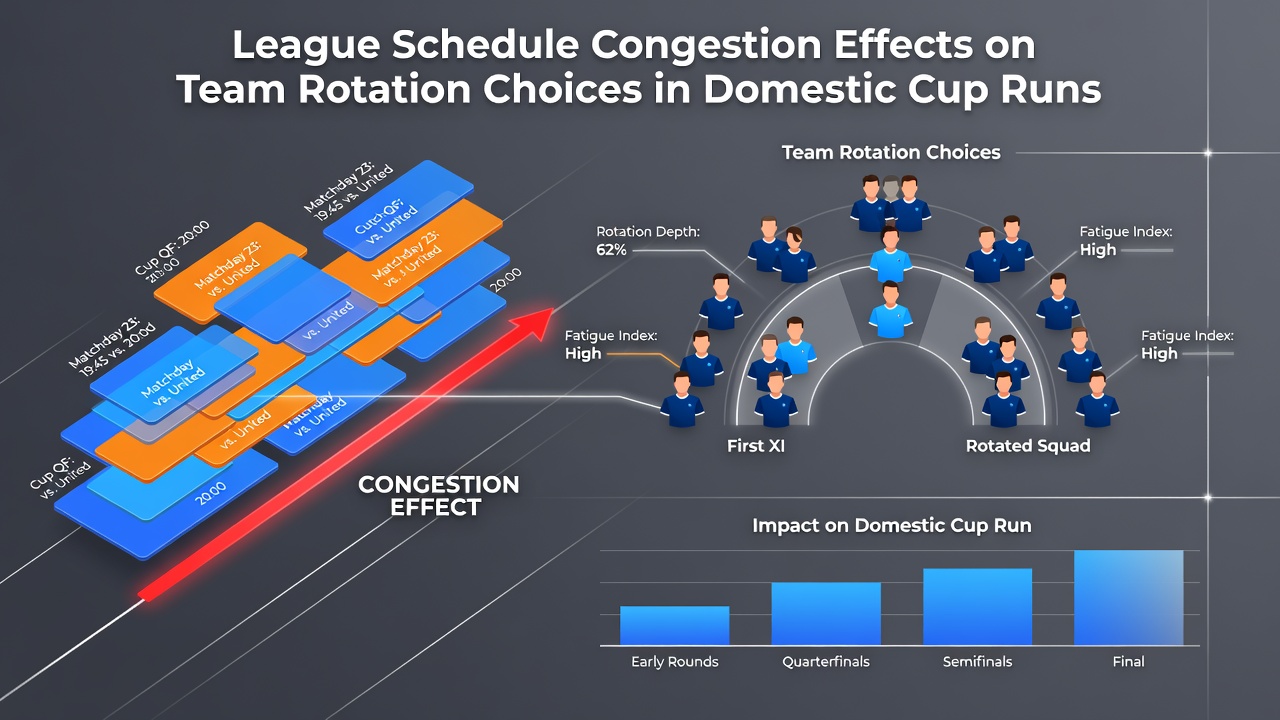
Modern football calendars pack multiple competitions into tight windows, and observers note that league schedule congestion directly shapes how clubs approach player rotation during domestic cup campaigns. Data from the 2025-2026 season shows average top-flight sides in major European leagues face between 45 and 55 matches across all fronts, with August 2026 marking the point where early cup fixtures overlap with the opening league rounds and European qualifiers. Researchers at sports science institutions track how clubs balance these demands through systematic squad management rather than relying on the same starting eleven week after week.
Fixture Overlap Patterns Across Leagues
League schedules create distinct pressure points that force rotation decisions in cup ties. In the English Premier League, for instance, clubs often encounter midweek cup matches sandwiched between weekend fixtures, while Bundesliga teams experience similar clustering around winter breaks and international windows. Studies compiled by the European Club Association indicate that teams contesting domestic cups alongside league and continental commitments record higher rates of player load accumulation during the August-September period, prompting coaches to adjust lineups accordingly. Those patterns repeat in Spain's Copa del Rey and Italy's Coppa Italia, where lower-league opponents in early rounds still require careful preparation amid packed calendars.
Rotation Strategies Employed by Clubs
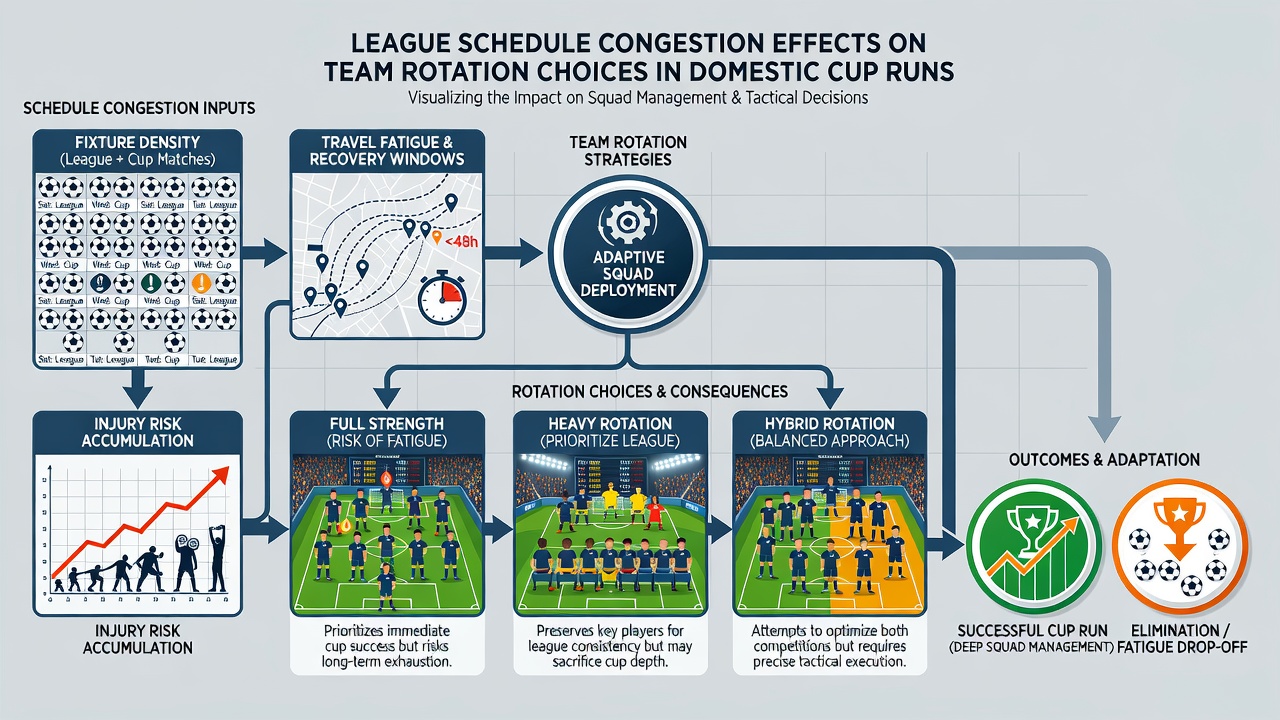
Clubs respond to congestion by cycling players through specific positions and recovery protocols. Midfielders and full-backs typically see the most frequent changes because their high-intensity running metrics rise sharply under compressed schedules. Data from the German Football Association reveals that sides advancing deep in the DFB-Pokal rotate central defenders at a 35 percent higher rate during cup weeks compared to standard league weekends. Coaches implement these changes based on GPS tracking and heart-rate recovery figures rather than intuition alone, allowing fresher legs to feature against cup underdogs while preserving key personnel for league points.
Teams with deeper squads gain measurable advantages in these scenarios. One Premier League club that reached the FA Cup quarterfinals in 2025-2026 used 22 different players across its cup run, according to match reports, and maintained a top-four league standing partly because rotation prevented the kind of cumulative fatigue that sidelines players for multiple weeks. In contrast, squads lacking equivalent depth often field stronger lineups in cup matches, increasing injury risk when the calendar tightens again in late autumn.
Injury and Performance Data
Performance metrics shift noticeably when rotation policies adapt to congestion. A longitudinal study conducted by researchers at the University of Queensland tracked elite players across multiple seasons and found that those rested for at least one cup match every four weeks showed a 12 percent reduction in soft-tissue injuries compared with peers who played consecutive high-load games. Domestic cup runs amplify these effects because the emotional and physical demands of knockout football add layers of stress beyond regular league fixtures. August 2026 fixtures already illustrate this trend, with several clubs reporting minor hamstring issues after back-to-back matches within 72 hours.
Coaches also weigh opponent strength when deciding rotation. Against lower-league sides in early cup rounds, managers frequently introduce academy graduates or fringe players, preserving established starters for tougher league opponents. Yet as cup runs progress and ties become more competitive, the margin for experimentation narrows, and rotation choices grow more conservative. Figures released by the French Football Federation show that Ligue 1 teams reaching the Coupe de France semifinals typically reduce squad rotation by 25 percent after the round of 16.
Case Examples from Recent Seasons
Take the example of a Bundesliga side that balanced league survival with a cup semifinal appearance in 2025. The club rotated its attacking midfielders across four consecutive cup matches, allowing two players returning from injury to regain match fitness without risking overload in the Bundesliga. Observers recorded that this approach contributed to a higher win rate in cup ties while maintaining mid-table league form. Similar patterns appear in the Eredivisie and Primeira Liga, where clubs with limited resources use cup competitions to blood young talent during congested periods without compromising primary league objectives.
International windows intersecting with domestic schedules add another variable. When national-team call-ups remove key players during cup weeks, clubs accelerate rotation for remaining squad members. This dynamic surfaced repeatedly in August 2026, when several leagues resumed after the summer break and cup fixtures arrived before full squads reassembled.
Conclusion
Schedule congestion continues to influence rotation choices in domestic cup competitions through measurable impacts on player workload, injury rates, and squad depth utilization. Clubs that align rotation policies with objective performance data maintain competitive edges across multiple fronts, while those that overlook congestion patterns encounter elevated risks. As calendars evolve, the relationship between league fixtures and cup progression remains a central factor in how teams manage their resources throughout the season.