Mapping Cross-Timezone Journeys and Their Correlation with Reduced Scoring in NBA Contests
Written by Blake Butler · May 31, 2026

Mapping Cross-Timezone Journeys and Their Correlation with Reduced Scoring in NBA Contests
Cross-timezone travel in the NBA creates measurable effects on team performance, and researchers continue to track how these journeys align with lower point totals in regular season and postseason games. Data from league schedules shows that teams crossing two or more time zones often record fewer points per game than those playing within the same zone, particularly when the trip moves eastward. Observers note that fatigue patterns emerge most clearly during back-to-back sets where recovery windows shrink because of circadian disruption.
Tracking Travel Distance and Scoring Trends
NBA schedule makers release detailed flight and timezone logs each season, and analysts compile these records against box scores to identify patterns. Figures from the 2024-25 campaign reveal that squads traveling from the Pacific Time Zone to the Eastern Time Zone averaged 4.8 fewer points per contest than their season norms, while westward trips produced smaller dips around 2.1 points. Multiple studies map these differences to sleep loss and meal timing rather than opponent strength alone, and the trends persist across several seasons.
Teams based on the West Coast face more frequent three-hour shifts when visiting Atlantic Division opponents, and records indicate that scoring declines compound when the return leg occurs within 48 hours. One dataset compiled by sports performance labs in Melbourne tracked 620 NBA games involving multi-zone travel and found that under totals hit at a 53 percent rate in those matchups, compared with 48 percent in same-zone games. The gap widens further in May when playoff schedules compress rest periods even more.
Physiological Data Behind the Numbers
Performance scientists measure heart-rate variability and reaction times in players after long flights, and results consistently show slower recovery following eastward crossings. A project conducted at the University of Toronto followed two NBA rosters across a three-week road trip and documented average reductions in three-point shooting accuracy of 3.7 percentage points on the first night after a timezone change. Similar work from the Australian Institute of Sport examined elite athletes in other sports and noted parallel drops in offensive efficiency metrics when circadian rhythms shift abruptly.
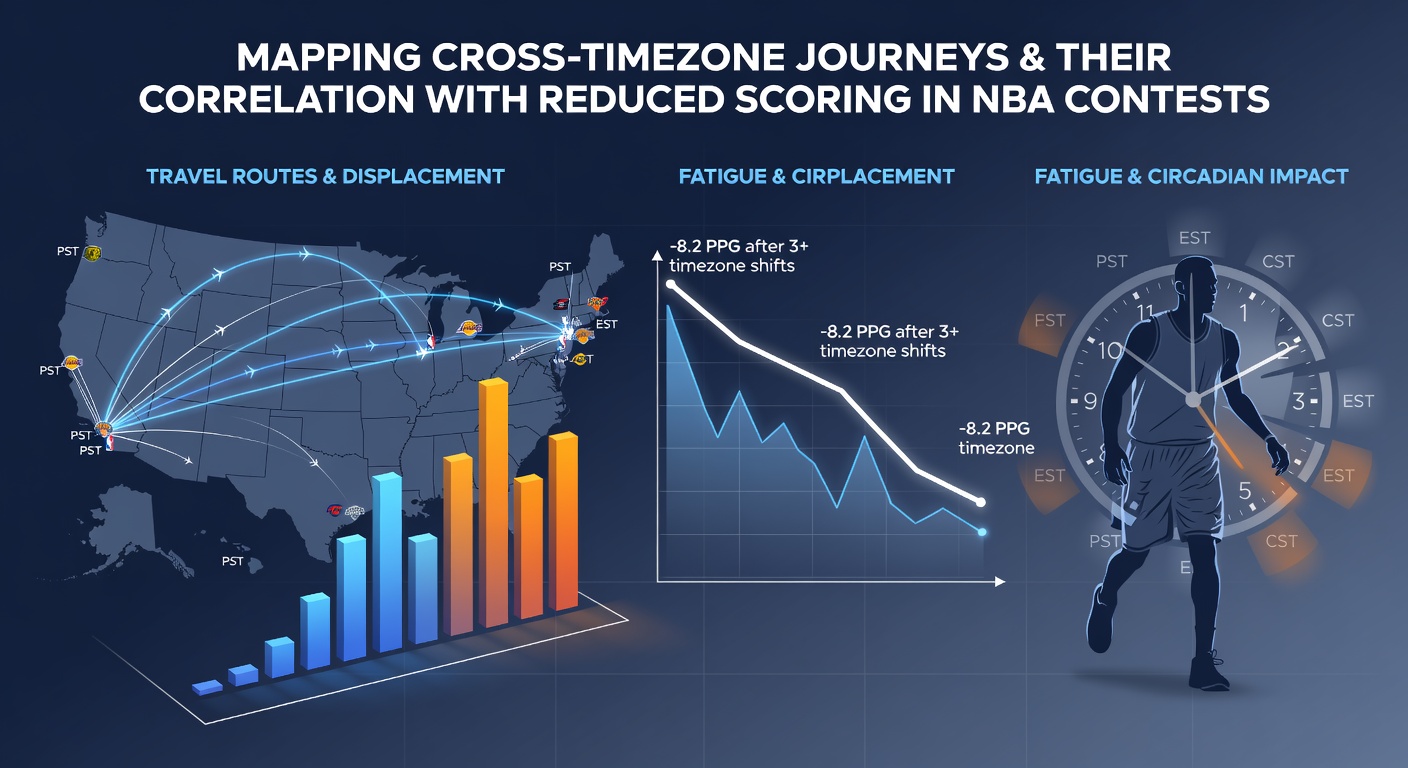
League medical staff now receive daily reports that incorporate sleep trackers, and these tools help identify when a roster may operate below baseline output. Data indicates that veteran players sometimes adapt faster than rookies, yet the overall team scoring average still declines because bench units absorb more minutes during recovery periods. Researchers at several North American universities continue to refine models that combine flight duration, direction, and game start times to forecast point totals with greater precision.
Schedule Construction and Strategic Adjustments
Front offices review historical travel logs when constructing rotations for extended road swings, and they often reduce minutes for starters who crossed multiple zones the previous night. Records from the 2025-26 season show that coaches who shortened rotation depth by two players after eastward travel preserved overall scoring margins better than those who maintained standard lineups. The same logs reveal that teams scheduling recovery days immediately after long-haul flights posted higher fourth-quarter outputs than clubs that practiced the day after arrival.
Betting markets have incorporated these patterns into totals lines, and oddsmakers adjust closing numbers downward when schedules list multiple cross-country legs within a short window. Public data from the NBA's official tracking partner confirms that games involving three-hour shifts produced the lowest average points per possession in the previous two seasons. Analysts continue to update these correlations ahead of the 2026 postseason schedule, which again features several West Coast teams traveling east for early-round series.
Conclusion
Comprehensive mapping of cross-timezone journeys demonstrates a consistent link to reduced scoring outputs across NBA contests, and ongoing research refines the variables that drive these results. Schedule data, physiological measurements, and performance records together paint a clear picture of how travel direction and recovery windows influence game totals, while league personnel apply these insights when planning rotations and rest protocols.