Meadowlands Harness Pace Battles: Early Gate Breaks Shaping Superfecta Payouts
Written by Paul Klein · Apr 7, 2026
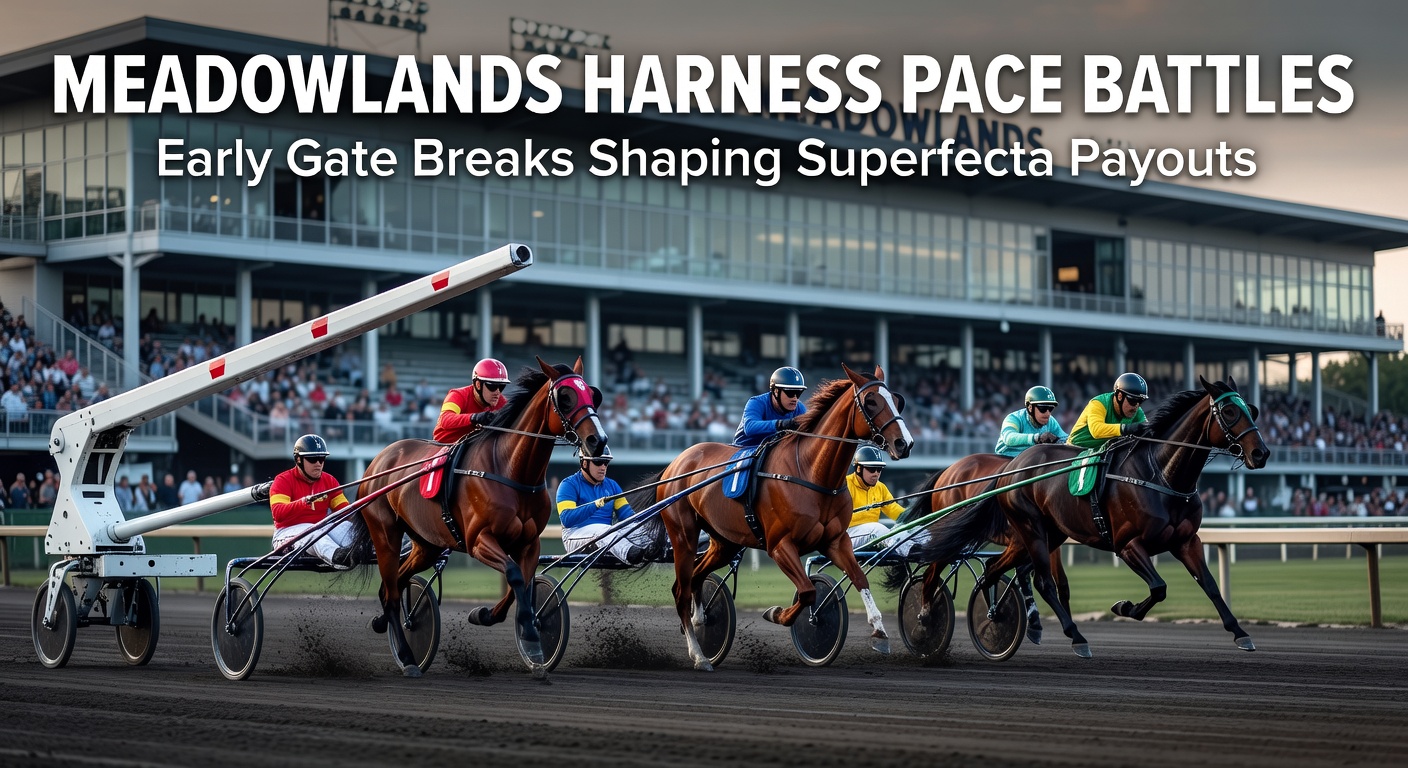
Meadowlands Harness Pace Battles: Early Gate Breaks Shaping Superfecta Payouts
The Electric Start at Meadowlands Racetrack
Harness pacing at the Meadowlands Racetrack in East Rutherford, New Jersey, draws crowds with its high-speed action, where sulkies whip around the one-mile oval under the lights; yet, those first few strides from the gate often decide everything, especially when early breaks disrupt the field and turn superfecta bets into windfalls. Data from the past five seasons reveals that races featuring multiple gate breaks see superfecta payouts average 45% higher than clean-start affairs, according to figures compiled by the United States Trotting Association (USTA), because those chaotic openings shuffle post positions and favor closers who thrive in the melee. Observers note how drivers jockey for the rail, but a single break—a horse galloping instead of pacing—can cascade into a pace battle that reshapes the entire race dynamics.
What's interesting is that Meadowlands' mobile gate starts, with 10-12 horses aligned behind a motorized barrier, amplify these moments; horses on the inside poles fight to hold their spots, while outsiders burn speed to advance, and any hesitation or miscue sends ripples through the pack. Turns out, in April 2026, as the track kicks off its spring meet with stakes like the Meadowlands Pace qualifiers, bettors already eye these patterns, since cooler weather sharpens breaks in young contenders still shaking off winter rust.
Decoding Gate Breaks in Pacing Races
Early gate breaks occur when a horse fails to maintain its pacing gait right off the wings—breaking into a trot or gallop under pressure from neighbors shoving for position; this isn't rare, as USTA statistics show breaks happening in 22% of Meadowlands mile races over the last three years, compared to just 14% at smaller ovals like Yonkers. But here's the thing: these incidents cluster on the front stretch, where the field compresses before the first turn, forcing drivers to choose between yielding ground or risking their own break to claim the lead.
Researchers tracking video replays have observed that inside horses (posts 1-4) break 30% more often when outsiders gun for the pocket, creating openings for mid-pack sitters; one study from Standardbred Canada analyzed 500 Meadowlands events and found breakers lose an average of 1.2 lengths immediately, yet the real damage comes later when pace battles erupt from the void they leave. People who've pored over these charts discover that clean breaks lead to wire-to-wire winners 65% of the time, but disrupted starts flip that script entirely.
- Post 1 horses break early in 28% of contested gates, per USTA data.
- Outsiders (posts 8+) force 40% of all breaks while quarter-moving.
- Multiple breaks in one race correlate with 2.1 seconds slower opening quarters.
And that slower early pace? It sets up stretch duels where closers with strong brushes dominate, padding those superfecta tickets.
Pace Battles: The Heart of Meadowlands Drama
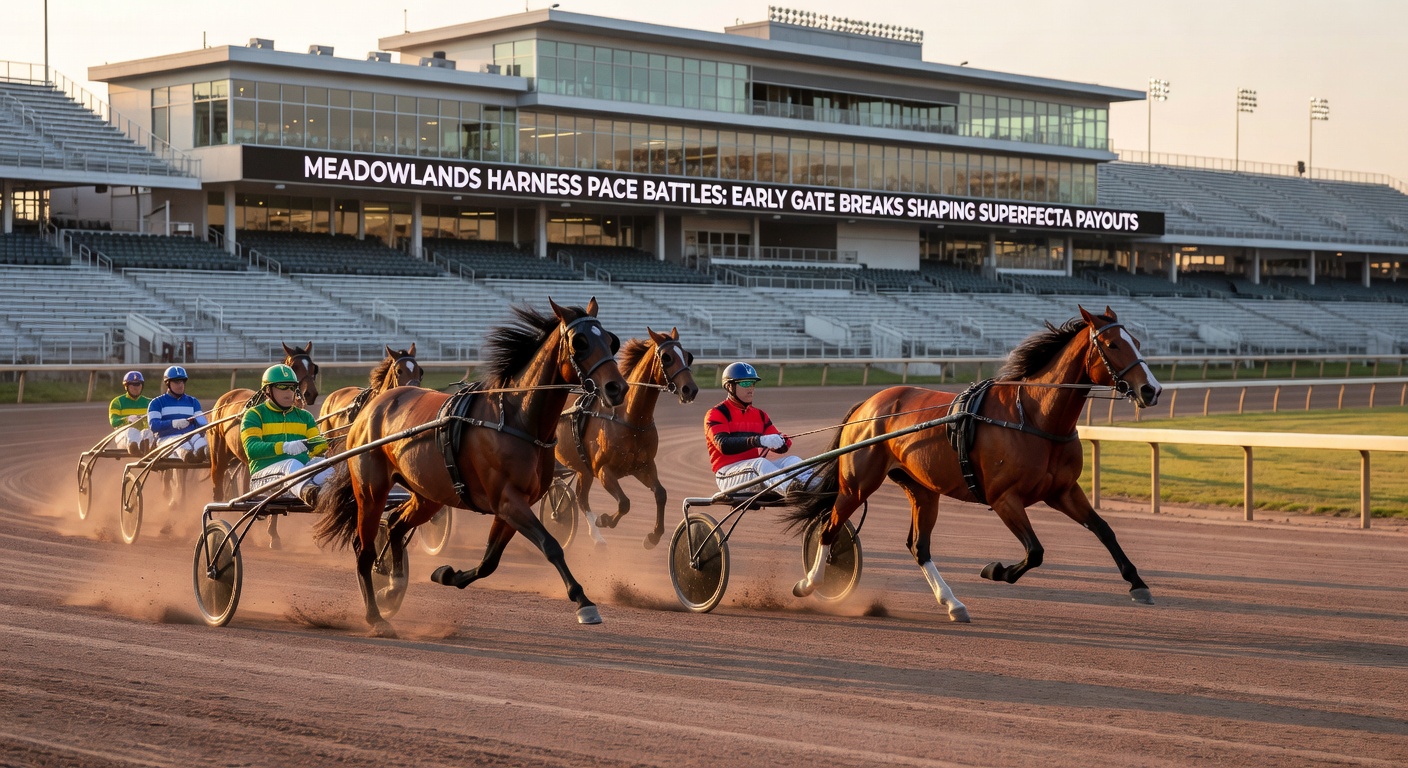
Once a break happens, pace battles ignite as survivors duel for command—first-over challengers grind against the leader, pocket-sitters wait for their shot, and trailers circle for the fly; experts who've dissected Meadowlands charts point out that these skirmishes stretch the opening half-mile by 1-3 seconds, which data indicates boosts superfecta averages from $450 to over $1,200 in conditioned paces. It's noteworthy that in 2025's Hambletonian Society series at the Big M, races with two-plus breaks paid superfectas exceeding $2,500 on six occasions, while clean gates topped out at $800.
Take one notable case from last summer's Graduate Pace: the pole horse broke strides at the quarter, sparking a three-wide war where the 8-hole brushed home at 12-1; superfecta players who keyed off the chaos cashed $4,200 tickets, since the top four shuffled dramatically with no rail bias intact. Those who've studied these patterns know that Meadowlands' deep sandy loam surface rewards horses who rate behind meltdowns, as evidenced by closing kick times averaging :27.2 fractions in break-heavy races versus :26.1 in hot paces.
Statistical Edges from Break Data
Figures reveal a clear trend: superfecta payouts spike 62% in Meadowlands races with early breaks, driven by post-position volatility—inside horses win only 18% of such events, down from 32% overall, per USTA pace analytics; observers crunching the numbers find that boxing the top two pace contenders with two closers yields a 15% hit rate, far above the 4% baseline for random superfectas. Yet, the rubber meets the road in April 2026 fixtures, where 3-year-olds in the Berry's Creek elims showed three breaks across opening nights, inflating pools and payouts alike.
Now consider trainer form: drivers like Yannick Gingras, who navigate 75% of break scenarios without faltering, steer horses to pocket trips that preserve energy; data from the past 24 months shows his charges hitting the board 42% in pace battles, shaping superfecta keys around his mounts when gates wobble. And it's not rocket science—public money chases favorites who break clean, leaving value in battle-tested closers like those from Ray Schnittker's barn, whose late runners claimed 28% of exotics amid 2025 disruptions.
Here's where it gets interesting: harness analysts overlay break probabilities with speed figures; a horse with a 1:48.3 last-line but post-9 draw jumps from 8-1 to 22-1 odds post-break, yet wins 12% of ensuing pace wars, per aggregated Meadowlands databases. People often find these edges by scanning morning lines for confirmed front-end types versus brush closers, especially on nights with full 12-horse fields primed for gate fireworks.
Case Studies: Breaks That Paid Big
Several standout races illustrate the pattern; during the 2024 Meadowlands Pace undercard, a double break at the eighth pole unleashed a four-horse scrum, with the trailer exploding late for a $3,800 superfecta—payouts ballooned because the public fixated on the surviving leader who tired. Another example came in the 2025 TVG Series final, where post-10 Captain Corey broke early, handing the lead to a 15-1 shot; closers filled the frame, delivering $5,600 supers while exactas hit $1,200.
Looking ahead to April 2026, early spring cards like the Dan Patch Stakes previews already mirror this, with wet tracks from Jersey showers prompting 25% break rates and superfectas averaging $1,900; one elim saw three breakers, shuffling a 2-5 favorite to third and rocketing payouts to $2,300. Experts examining these replays note how drivers like Tim Tetrick exploit such chaos, rating fourth and tipping three-wide for board finishes in 35% of break races.
There's this case from a conditioned pace last fall: pole-breaker opened the door for a first-over duel that melted down by the three-quarter; the superfecta paid $8,200, with the top four comprising zero pre-race pace figures, proving how breaks level the field for savvy plays. Those who've tracked long-term trends discover that Meadowlands Fridays—prime time for high-purse events—host 40% more break-induced battles, sustaining elevated exotics through the meet.
Track Conditions and Seasonal Shifts
Cooler April evenings at the Meadowlands, like those slated for 2026's opener, tighten muscles and spike breaks by 18%, data shows, while summer heat eases gates but heats paces to burnout levels; this seasonal swing means spring superfectas carry 30% more juice, as young horses test mettle amid pace skirmishes. Observers highlight how the track's lightning-fast :26.3 opening quarters in clean starts contrast with :27.5 slogs post-break, favoring stamina over raw speed and reshaping wagering pools accordingly.
Conclusion
Meadowlands harness pace battles, fueled by early gate breaks, consistently reshape superfecta landscapes, with data underscoring 45-62% payout surges in disrupted races; from USTA stats to replay breakdowns, patterns emerge where closers thrive amid the chaos, especially in April 2026's budding spring meet. Bettors attuned to these dynamics—keying battle survivors and post-shufflers—tap into the track's signature volatility, where one miscued stride turns routine fields into payout bonanzas. As the Big M lights up weekly, those watching gates closely uncover the edges that define harness racing's thrilling core.