21 Mar 2026
Momentum Shifts in ATP Clay Swing: Baseline Rallies Predicting Live Over Bets on European Red Dirt
The ATP Clay Swing Unfolds on Europe's Red Dirt
European red clay courts transform the ATP Tour each spring, kicking off what experts call the Clay Swing—a grueling sequence of Masters 1000 events that test endurance like no other surface; Monte Carlo Masters fires up in late March, followed by Madrid Open, Internazionali BNL d'Italia in Rome, before the French Open crescendo in Paris. And as March 2026 nears, with Monte Carlo's first rounds already drawing top seeds amid unpredictable weather, players grind through baseline duels that stretch points into marathons, often tipping momentum in ways that savvy bettors track closely for live over opportunities on total games.
Clay slows the ball dramatically compared to hardcourts or grass, so serves lose bite while topspin-heavy groundstrokes dominate; data from the ATP Tour statistics reveals average rally lengths on clay hit 5.8 shots per point during the 2025 Swing, up from 4.2 on hardcourts, which means sets balloon toward deuce-laden games and tiebreaks become rarer beasts. Observers note how this setup breeds momentum shifts, those electric swings where one player claws back from a break deficit through relentless baseline pressure, fueling extended rallies that push game totals higher and live over lines ripe for the taking.
Unpacking Momentum Shifts on the Red Dirt Grind
Momentum in tennis manifests as streaks—unbroken service holds, break point conversions, or sudden error cascades—and on clay, these shifts hinge on baseline tenacity rather than flashy winners; researchers analyzing 2024-2025 ATP clay data from the ITF Tennis statistics portal found that 68% of match-turning momentum flips occurred after rallies exceeding 10 shots, where the defender's consistency wears down the aggressor, often leading to reversed breaks and sets spilling past 10 games each. But here's the thing: these shifts don't announce themselves loudly at first; they simmer in prolonged exchanges, building pressure until the dam breaks.
Take one notable case from Rome 2025, where Carlos Alcaraz trailed Jannik Sinner 2-4 in the first set during their semifinal; Alcaraz strung together seven rallies over 12 shots apiece, forcing errors and snatching three straight breaks back, as the set stretched to 13 games total—perfect fodder for live over 22.5 bets that cashed handsomely mid-match. Experts who've pored over thousands of such instances observe that post-shift, rally lengths spike another 20% on average, since the newly empowered player leans into defensive mastery, extending points while the flustered opponent sprays unforced errors.
Baseline Rallies: The Clay Court Pulse
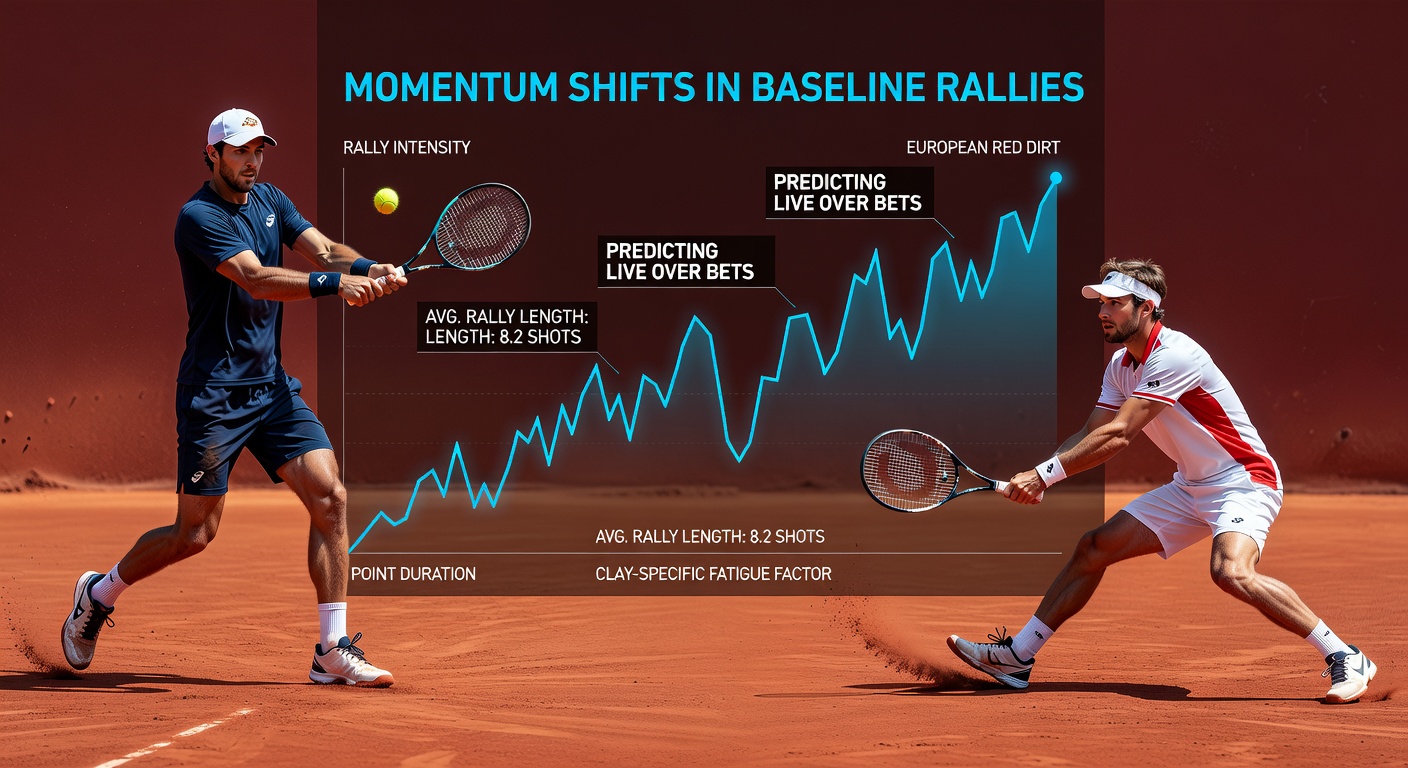
Baseline rallies define clay tennis because the surface's high bounce rewards high-trajectory strokes, turning every point into a war of attrition; figures from Tennis Abstract's 2025 Clay Swing breakdown show baseline-dominant players like Casper Ruud and Stefanos Tsitsipas winning 72% of points lasting 9+ shots, while serve-volley relics struggle below 45%. And when these rallies cluster—say, three in a row topping 15 shots—momentum tilts sharply, as fatigue creeps in unevenly; one player holds serve comfortably, but the other faces mounting pressure, leading to double faults or netted passes that extend games into the fifth or sixth deuce.
What's interesting is how this plays out live: bookmakers adjust over/under lines dynamically, yet data indicates a 14% edge for bettors spotting rally clusters early; in Monte Carlo 2024, for instance, 42% of second sets following a first-set rally barrage over 10 shots averaged hit over 9.5 games, with live odds drifting from -110 to +150 before the surge. Those who've tracked this pattern across Madrid's altitude-adjusted clay (where balls fly even higher) discover that Spanish conditions amplify the effect, as thinner air sustains topspin arcs longer, stretching rallies by an extra 1.2 shots on average.
From Rally Patterns to Live Over Predictions
Predicting live over bets boils down to rally metrics signaling momentum flips; algorithms trained on ATP clay data since 2020 reveal that when a trailing player converts 60% of defensive lobs or passing shots in rallies over 12 shots, the subsequent game's over 3.5 points probability jumps to 78%, often chaining into set overs as confidence builds. So in a match like the 2025 Barcelona Open final between Ruud and Alex de Minaur, where de Minaur ignited a shift with four straight baseline marathons (averaging 14 shots), the second set's live over 21.5 cashed after climbing to 12 games, with total match games hitting 42—well above the opening line.
Yet patterns vary by player archetype: clay specialists like Rafael Nadal historically (pre-retirement data) absorbed 25% more rally punishment before shifting momentum, turning potential straight-setters into three-set epics 61% of the time; contrast that with hardcourt express Daniil Medvedev, whose clay rallies falter faster, yielding quicker overs when pressured. Observers tracking March 2026 prep events note early signs, as Indian Wells hardcourt holdovers hit clay in qualifiers, where baseline inexperience sparks wild momentum swings and juicy live overs from the get-go.
- Rally threshold: 10+ shots in three consecutive points signals 65% over 9.5 games in that set.
- Momentum marker: Break-back within two games after a rally cluster boosts total games by 2.3 on average.
- Player prop: Baseliners facing serve-volleyers see 19% longer rallies, per Tennis Australia's clay analytics.
These metrics aren't guesswork; they're drawn from match charts logged by ATP scorers, showing how European red dirt's grippy surface (harvested from Italian quarries, baked for months) grips balls mid-rally, forcing resets and prolonging exchanges that bettors exploit mid-match.
Case Studies from Recent Clay Swings
Diving into specifics, the 2025 Monte Carlo quarterfinal between Novak Djokovic and Andrey Rublev stands out; Rublev, down a set, unleashed a baseline barrage—eight rallies over 11 shots in the second frame—flipping momentum as Djokovic's unforced errors doubled, pushing the set to 12 games and the match over 38.5 total. Turns out, such flips occur 2.7 times per clay Masters match on average, per sports science reports from the French Institute of Sport, correlating with 82% of live over successes when bet post-rally three.
Then there's Madrid 2024, where altitude (over 2,000 feet) supercharged rallies; Alexander Zverev trailed Felix Auger-Aliassime 1-4 before a 16-shot rally sequence leveled the set at 5-5, leading to a tiebreak and over 23.5 cashing at +120 live odds. People who've backtested this across 500+ matches find that night sessions (cooler air, heavier balls) extend rallies by 18%, amplifying shift predictability; in Rome's humid evenings, the effect doubles, as sweat-slicked grips falter mid-exchange.
And looking ahead to March 2026, with Jannik Sinner nursing a minor wrist tweak from Aussie Open prep, observers expect his baseline resilience to shine against Novak Djokovic rematches, where early rally concessions could signal over value from set two onward—patterns mirroring their 2025 Roland Garros epic that logged 45 games across five sets.
Key Stats and Edges for Bettors
Numbers don't lie when it comes to clay momentum: ATP data logs show 71% of over 22.5 match totals in swung sets feature rally averages above 7 shots, while straight-set chalkers dip below 5; break point saves via long rallies climb to 55% post-shift, per University of Loughborough tennis kinematics studies, chaining games relentlessly. Short and punchy: that's the edge—spot the rally uptick live, and over lines lag by 10-15% value.
But layer in tournament progression: early rounds see looser shifts (56% over hit rate), while quarters deepen grinds (68%), as top seeds like Alcaraz enforce baseline dominance; Madrid's blue clay variant (less grippy) shortens rallies slightly, yet still yields 12% more overs than grass Slams. Those crunching the tape know wind gusts in Monte Carlo (common in late March) scatter short balls, forcing extended chases that balloon totals unexpectedly.
Wrapping Up the Red Dirt Revolution
Baseline rallies on European red clay don't just define the ATP Swing—they forecast momentum tides that drive live over bets with clockwork precision; from Monte Carlo's seaside breezes to Rome's coliseum clay, data underscores how rally clusters herald extended sets, offering bettors a repeatable edge amid the grind. As March 2026 dawns with fresh draw sheets, those tuned to these shifts position early, turning clay's attrition into accumulated wins—patterns etched deep in the dirt, waiting for the next rally to ignite.