Referee Decision Patterns Reshaping Card Totals in CONMEBOL World Cup Qualifiers
Written by Blake Butler · Aug 23, 2026
Referee Decision Patterns Reshaping Card Totals in CONMEBOL World Cup Qualifiers
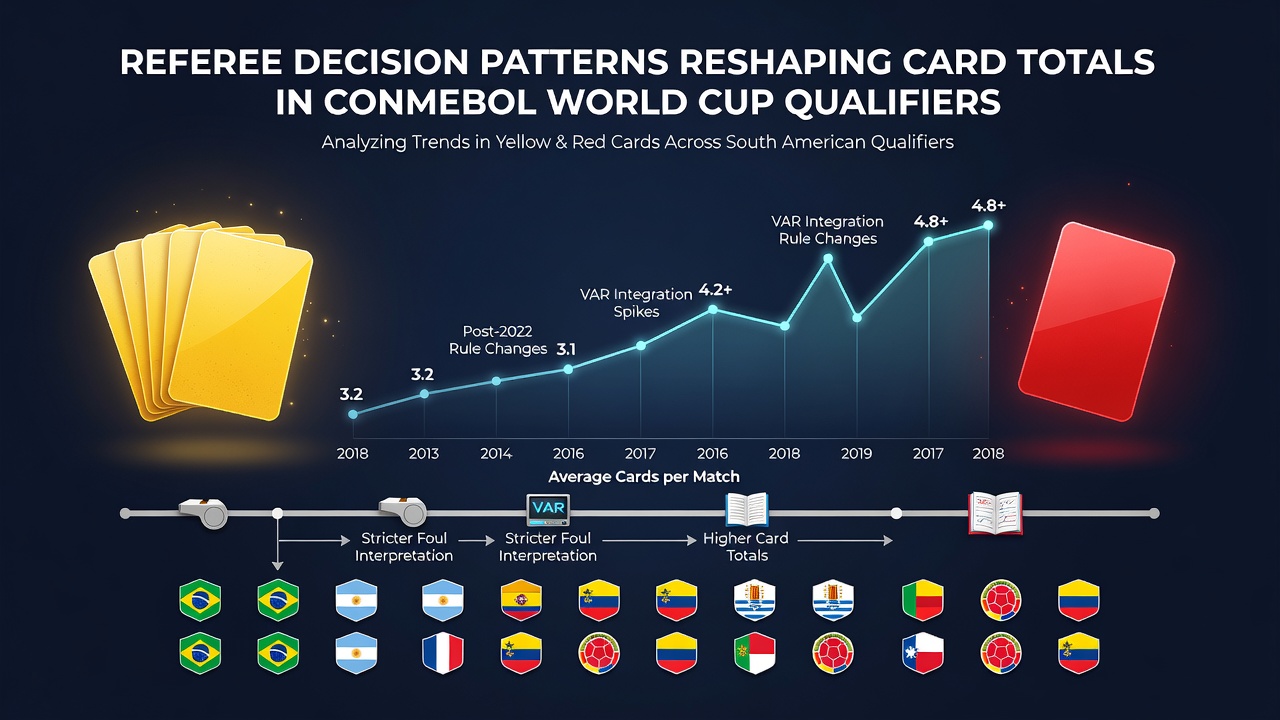
Referee decision patterns have altered card totals across CONMEBOL World Cup qualifiers in measurable ways, with data from recent cycles showing shifts in yellow and red card averages per match. CONMEBOL competitions feature intense physical play, and officials apply rules that produce distinct disciplinary outcomes compared to other confederations. Match records indicate that card issuance rates rose in several 2025 fixtures, driven by stricter enforcement of fouls in midfield areas and quicker reactions to dissent.
Key Patterns in Card Distribution
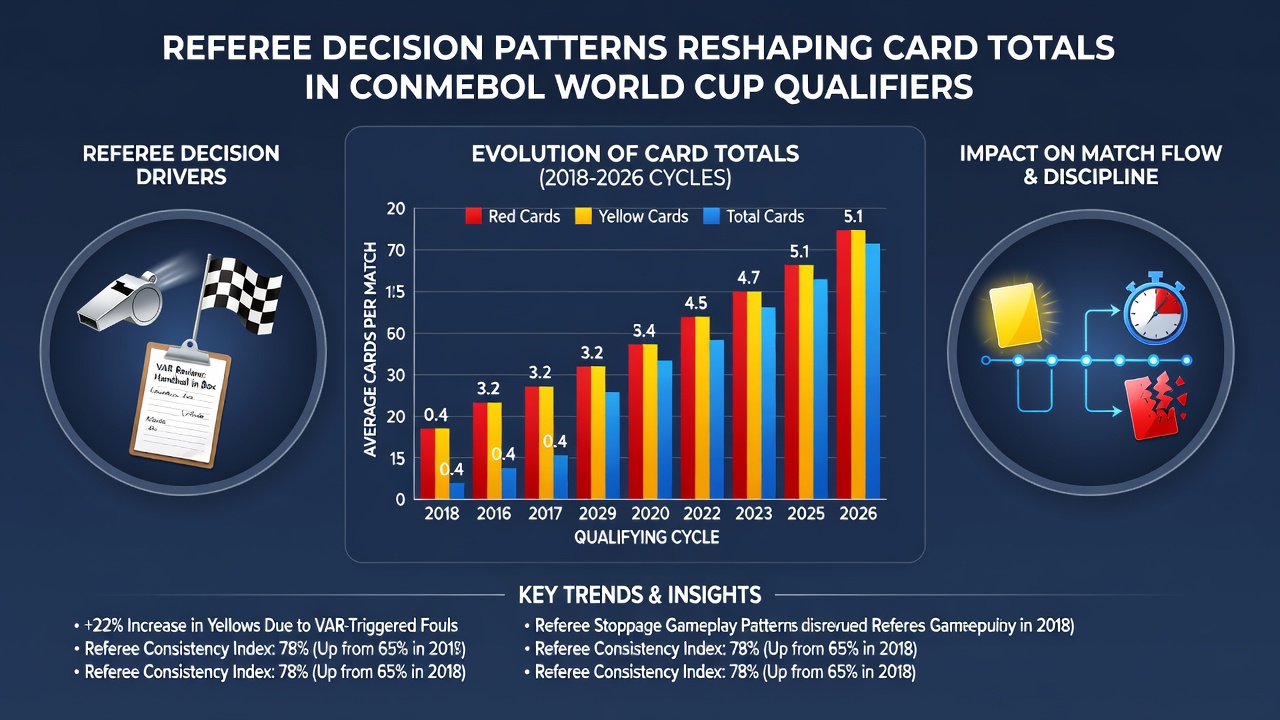
Statistics compiled from CONMEBOL World Cup qualifying rounds reveal that referees from certain nations issue cards at higher frequencies during home versus away scenarios, while others maintain consistent thresholds regardless of venue. Brazilian and Argentine officials, for instance, recorded elevated yellow card counts in matches held at high-altitude venues such as those in Bolivia and Ecuador, where fatigue contributes to more challenges. Data from the 2023 to 2025 qualifying windows shows an average of 5.8 yellow cards per game across the ten-team group, up from 4.9 in the prior cycle, according to figures released by the South American Football Confederation.
Red cards remain less common yet follow distinct clusters, often appearing in derbies between teams with longstanding rivalries. Observers note that VAR interventions have influenced these totals by prompting reviews that lead to dismissals in situations previously handled wth cautions alone. In August 2026, ongoing qualifiers continue to reflect these trends as teams push for final positioning ahead of the expanded World Cup tournament.
Influence of Specific Referee Assignments
Assignment records demonstrate that certain referees consistently oversee matches with higher card volumes, particularly when officiating games involving physical styles from teams like Uruguay and Paraguay. Researchers tracking these assignments found correlations between referee nationality and card rates, with South American officials averaging 6.2 cards per match compared to 4.7 when European or Asian referees handle CONMEBOL fixtures. This variation stems from differences in tolerance for tactical fouls and time-wasting, patterns documented in post-match reports submitted to CONMEBOL headquarters.
One study from the University of Buenos Aires examined 120 qualifying matches and identified clusters where late-game card spikes occurred after teams trailed by one goal. These surges align with increased pressure on defenders, leading officials to penalize holding and shirt-pulling more readily in the final 15 minutes.
Impact on Match Outcomes and Accumulator Markets
Card totals influence secondary betting considerations because over and under thresholds respond directly to referee tendencies. League-wide data indicates that matches assigned to referees with histories above six cards per game produced over 5.5 card results in 62 percent of cases during the 2025 qualifiers. Teams known for aggressive pressing, such as Chile and Colombia, appear in these elevated totals more frequently when facing counter-attacking opponents.
External factors including weather and crowd density also interact with decision patterns. High humidity conditions in matches played in Manaus or Barranquilla coincide with fatigue-related fouls that prompt additional cautions. Reports from regional sports authorities in Brazil and Colombia confirm these environmental influences on play intensity and subsequent disciplinary actions.
Broader Context Within Global Football
CONMEBOL qualifiers stand apart from UEFA or AFC equivalents because of the compressed schedule and travel demands across South America, factors that amplify physical confrontations. FIFA guidelines on player safety encourage stricter enforcement in these conditions, contributing to the observed rise in card issuance. Comparisons with European qualifiers show CONMEBOL averages exceeding those in UEFA by approximately 1.3 cards per match, a gap attributed to differing interpretations of advantage play and simulation.
Industry reports from the International Centre for Sports Studies highlight how these patterns persist across multiple qualification cycles, providing consistent benchmarks for performance analysis. Teams adapt by adjusting tackling techniques, yet the underlying referee variability maintains influence over final card counts.
Conclusion
Referee decision patterns continue to reshape card totals in CONMEBOL World Cup qualifiers through consistent variations tied to assignment, venue, and match context. Data from multiple cycles illustrates measurable increases in yellow cards alongside stable but notable red card clusters in high-stakes fixtures. These trends, documented through official confederation records and academic reviews, provide clear reference points for understanding disciplinary outcomes in the ongoing 2026 qualification process.