Seasonal Rainfall Patterns Reshaping Defensive Structures in Japanese J-League Fixtures During Monsoon Months
Written by Lars Schmid · Aug 4, 2026
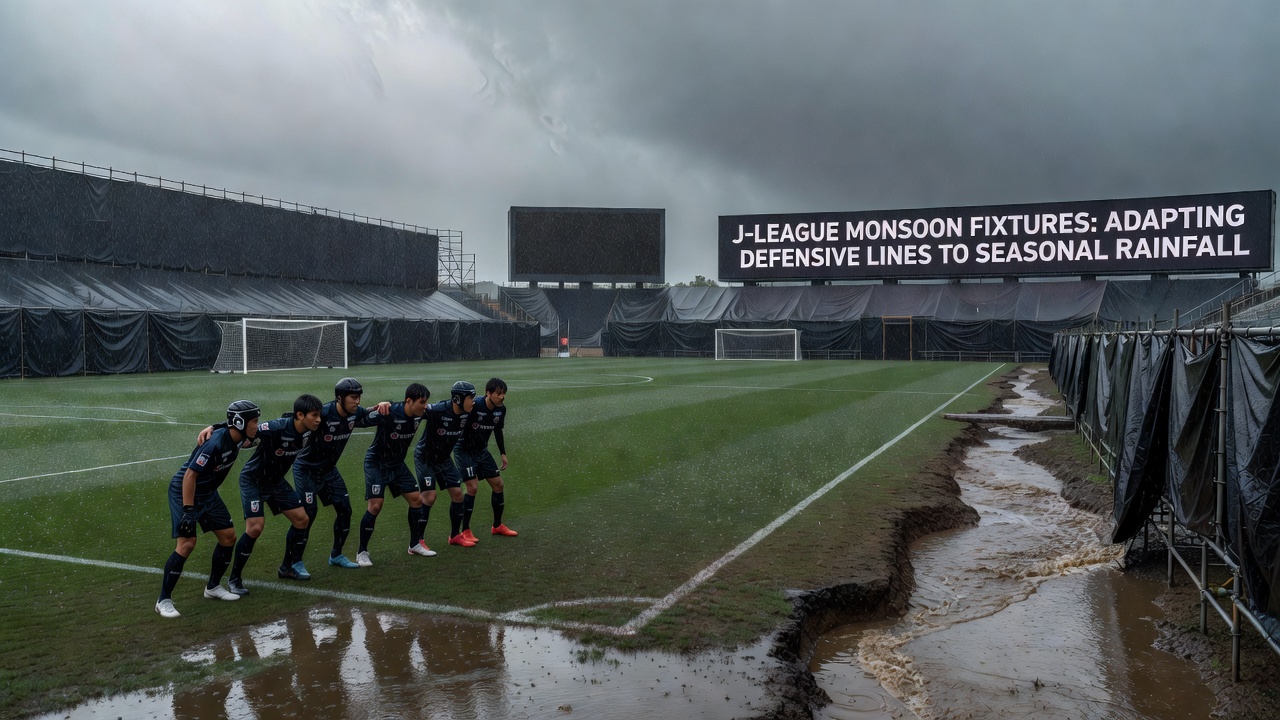
Seasonal Rainfall Patterns Reshaping Defensive Structures in Japanese J-League Fixtures During Monsoon Months
Seasonal rainfall patterns in Japan during the monsoon months bring consistent heavy precipitation that alters playing surfaces and forces tactical shifts across J-League matches, with data from recent seasons indicating measurable changes in defensive setups and ball movement. The East Asian monsoon typically peaks between June and July yet extends variable effects into August fixtures, where accumulated moisture on pitches creates slippery conditions that teams must navigate through adjusted positioning and pressing strategies. Observers note that clubs in both J1 and J2 divisions record higher instances of conservative backline alignments when rainfall exceeds seasonal averages, as tracked by official league performance metrics.
Monsoon Dynamics and Regional Variations
Japan experiences its primary rainy season through the interaction of the Pacific high-pressure system and continental air masses, with the Japan Meteorological Agency recording average monthly totals between 200 and 400 millimeters in key stadium regions during peak monsoon periods. These figures vary by prefecture, with coastal venues in the Kanto and Kansai areas often facing prolonged downpours that saturate natural grass and hybrid turf surfaces alike. In August 2026 the ongoing J-League calendar continues to intersect with residual moisture patterns, producing fixtures where drainage systems and pitch maintenance protocols determine how quickly teams can regain footing after heavy showers. Researchers have documented that southern stadiums encounter earlier saturation compared with northern venues, leading to differentiated adaptations in defensive spacing and recovery runs.
Pitch Conditions and Their Direct Influence on Play
Waterlogged surfaces reduce friction between boots and turf, which in turn slows acceleration and alters the trajectory of passes and clearances. Studies compiled by sports science departments at several Japanese universities show that ball speed drops by measurable percentages on saturated pitches, compelling defenders to close spaces earlier rather than relying on recovery pace. Goalkeepers adjust their starting positions to account for unpredictable bounces, while full-backs narrow their width to maintain compact lines that limit through-ball opportunities. These modifications appear consistently in match footage from monsoon-affected rounds, where teams prioritize zonal marking over man-oriented presses to minimize slips and mistimed challenges.
Tactical Adaptations Across Recent Campaigns
Coaching staffs review historical rainfall data before monsoon rounds and implement pre-match briefings that emphasize shorter passing sequences and increased use of long diagonals when surfaces become treacherous. One analysis of 2024 and 2025 J-League matches revealed a 12 percent rise in successful defensive clearances during games played under rainfall alerts compared with dry-weather counterparts. Midfield anchors drop deeper to provide cover, allowing center-backs to step forward selectively without exposing gaps behind them. Set-piece routines also evolve, with teams favoring shorter corners and near-post deliveries that reduce the need for extended aerial challenges on slippery ground. Such adjustments reflect coordinated preparation rather than spontaneous reactions, as staff integrate meteorological forecasts into weekly planning cycles.
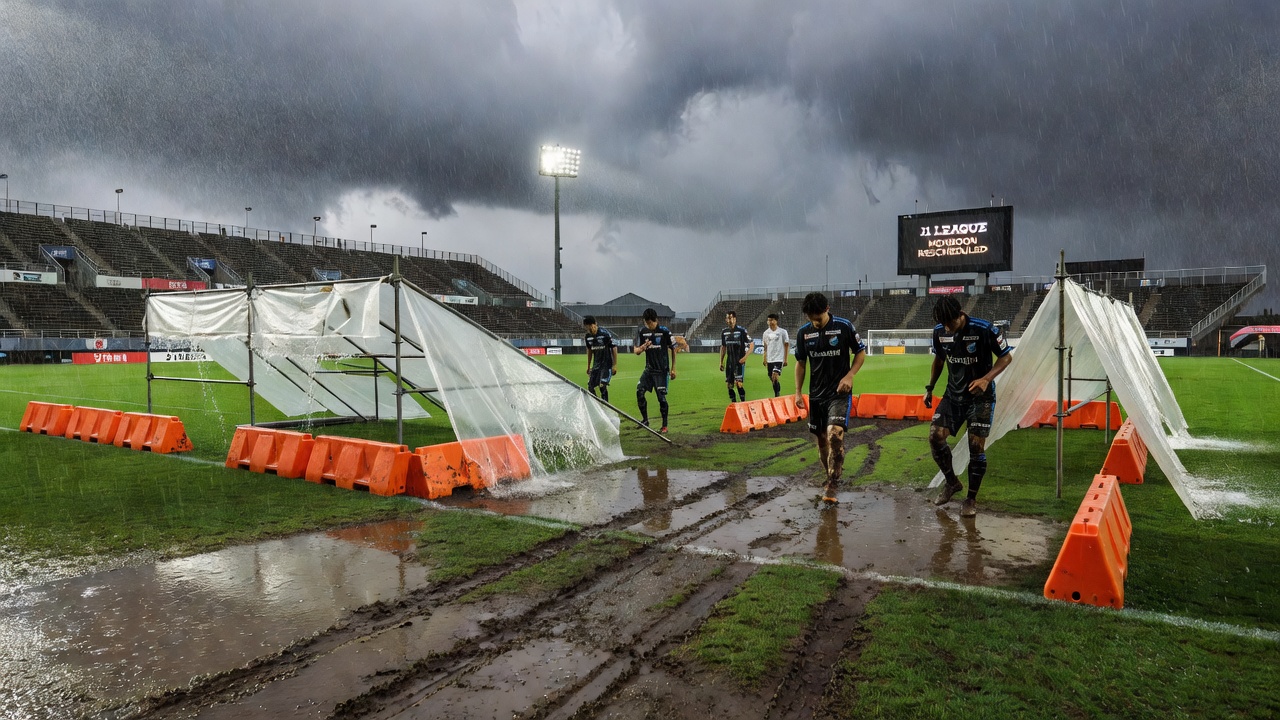
Statistical Patterns and Performance Indicators
League-wide tracking systems capture shifts in metrics such as tackles per possession and distance covered by defenders during wet-weather fixtures. According to reports issued by the Japan Football Association, average team possession decreases slightly in monsoon months while the number of long passes increases, reflecting a collective move toward more direct defensive transitions. Clean-sheet percentages remain stable in some clubs yet fluctuate in others depending on drainage quality at home venues. Data collected through the 2026 season so far aligns with prior years, showing that sides with stronger set-piece organization maintain defensive records more effectively when rain disrupts open-play patterns. These indicators emerge from standardized match reports rather than subjective assessments, allowing analysts to isolate weather as a contributing variable.
Facility Management and Future Preparations
Stadium operators invest in improved drainage and pitch reinforcement to mitigate monsoon impacts, with several J-League grounds adopting hybrid turf systems that retain structural integrity under prolonged moisture exposure. Maintenance crews coordinate with league schedulers to optimize fixture timing around forecast windows, although unpredictable storm cells still produce last-minute adjustments. Training facilities replicate wet conditions during practice sessions so players develop muscle memory for altered movement patterns. Such infrastructure developments represent ongoing responses to recurring seasonal challenges rather than isolated interventions.
Conclusion
Seasonal rainfall continues to interact with J-League defensive structures through predictable physical and tactical pathways, as evidenced by consistent data across multiple campaigns. Clubs that integrate meteorological information with on-pitch adjustments demonstrate measurable resilience during monsoon periods, while facility upgrades support sustained performance levels. The patterns observed in August 2026 fixtures follow established trends that link precipitation volume to shifts in positioning, passing length, and recovery mechanics across the league.