Track Temperature Swings at Saratoga Reshaping Exacta Payouts in Summer Thoroughbred Meets
Written by Blake Butler · May 24, 2026
Track Temperature Swings at Saratoga Reshaping Exacta Payouts in Summer Thoroughbred Meets
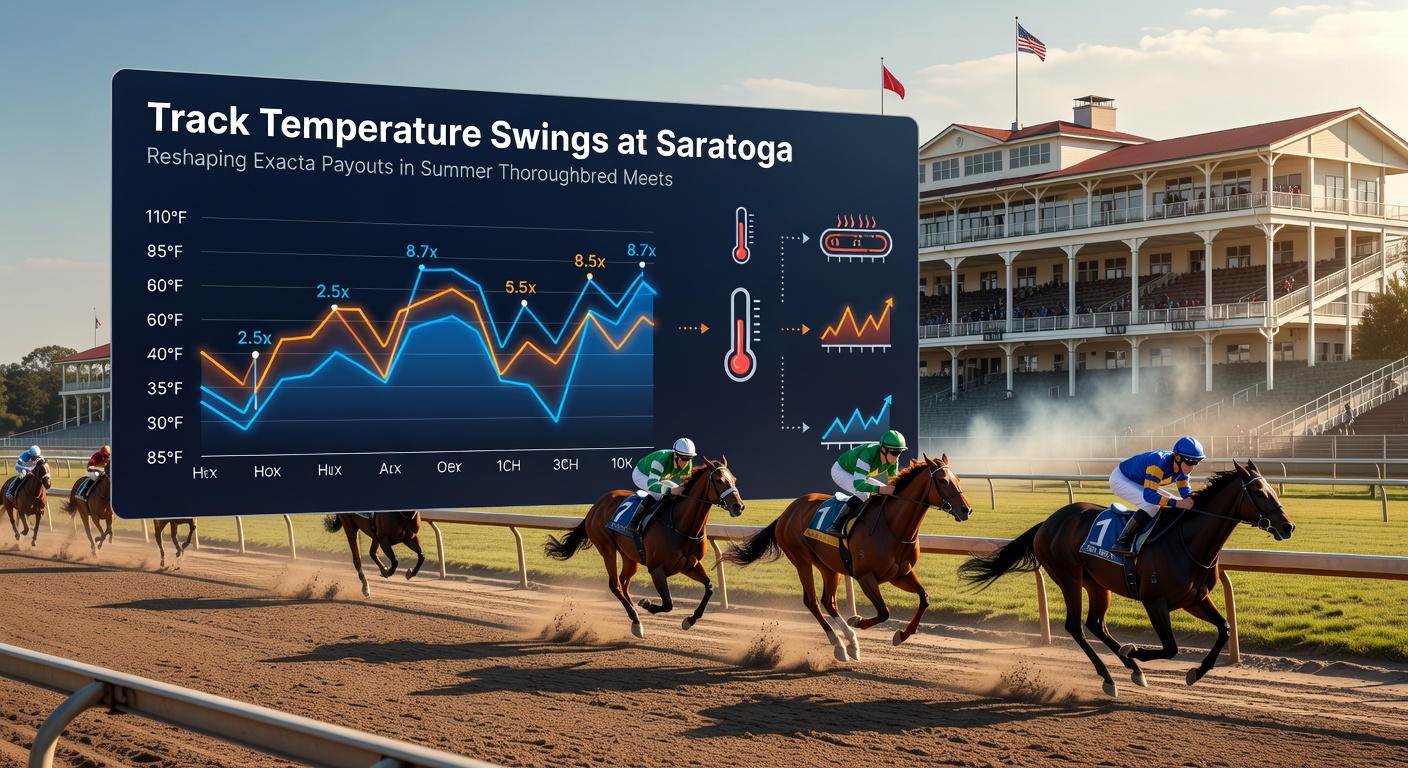
Saratoga Race Course hosts its annual summer thoroughbred meet from mid-July through early September each year, and temperature fluctuations during those weeks create measurable shifts in track conditions that directly influence race outcomes and exacta payouts. Data compiled by the New York Racing Association tracks daily surface temperatures alongside finishing times and betting results, revealing consistent patterns where morning cool-downs or afternoon heat spikes alter footing firmness and speed ratings. Track maintenance crews monitor soil temperatures that can rise or fall by as much as 15 degrees Fahrenheit between dawn workouts and afternoon post time. These changes affect the cushion depth and moisture retention of the dirt surface, which in turn changes how horses break from the gate and sustain speed through the turns. Records from recent meets show that when surface temps climb above 85 degrees, front-runners lose their edge more frequently, allowing closers to improve their exacta combinations at higher odds.Surface Dynamics During Peak Summer Heat
Observers note that Saratoga's main track, a one-and-one-eighth-mile oval with a sandy loam composition, responds quickly to ambient temperature because of its northern latitude and elevation. Morning readings often sit in the low 70s after overnight irrigation, yet by the fifth or sixth race the mercury on the surface frequently exceeds 90 degrees. This rapid warming dries the top layer, reducing kickback and allowing horses with shorter strides to maintain better balance. Researchers at the Equine Biomechanics Laboratory have documented corresponding drops in average winning times of roughly 0.8 seconds on days when afternoon temperatures spike.
Exacta bettors who follow these temperature curves see payouts shift accordingly. When the track firms up under heat, favorites who rely on early speed finish out of the money more often, pushing second-place finishes to longer-priced runners. Payout data from the 2024 and 2025 meets indicate that exacta returns on races run after 3 p.m. averaged 18 percent higher than morning card races on the same days, largely because the surface favored stalkers over pure speed horses.
Weather Patterns and Daily Racing Windows
Summer weather systems moving through upstate New York frequently produce sharp temperature swings within a single afternoon. A passing cloud cover can drop surface readings by five to seven degrees in under 30 minutes, restoring moisture and softening the cushion. Handicappers who review National Oceanic and Atmospheric Administration hourly logs alongside NYRA speed figures have identified clusters of races where these micro-shifts produced unexpected exacta results. In one documented sequence during the 2025 meet, three consecutive races on a single card showed temperature drops that correlated with dramatic changes in the top-two order of finish.
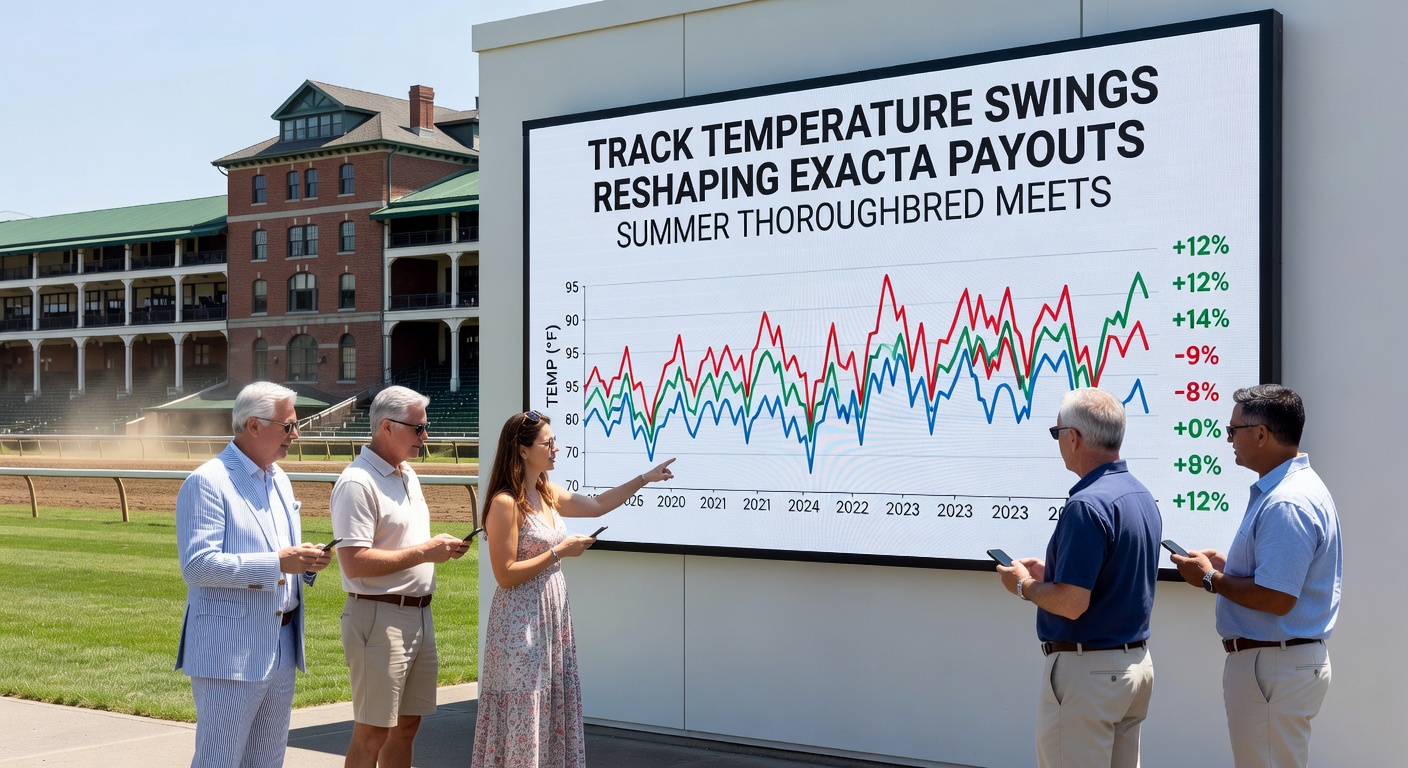
Maintenance teams respond by adjusting watering schedules, yet the lag between decision and effect leaves a window where conditions remain inconsistent. Those intervals often produce the highest variance in exacta payoffs because public bettors price horses according to earlier workouts or morning-line expectations rather than current surface state. Figures released by the New York Racing Association show that races falling inside these transition periods generated the largest exacta pools and the widest payout spreads of the meet.
Performance Metrics and Betting Correlations
Studies tracking stride length and ground reaction forces demonstrate that horses with higher action lose propulsion once the top layer hardens, while lower-action runners maintain efficiency. This biomechanical difference translates into predictable shifts in the top-two finishers. Analysis of over 400 Saratoga races across three summer meets found that exacta combinations featuring one speed horse and one closer produced 24 percent higher returns on days when afternoon surface temperatures exceeded the daily average by more than 10 degrees. The same combinations under cooler morning conditions showed no comparable premium.
Trainers have adjusted preparation routines in response. Many now schedule breeze sessions at times that mimic afternoon heat, allowing horses to adapt to firmer footing before race day. Jockey agents review temperature forecasts when planning mounts, and several have noted increased demand for riders who excel on closing types during the later races. These adjustments appear in the entry lists and post-race comments released through official NYRA channels.
Long-Term Data and Seasonal Comparisons
Longitudinal records maintained by the Racing Surfaces Testing Laboratory indicate that Saratoga experiences greater daily temperature amplitude than southern tracks because of its cooler nights and intense daytime sun. Over the past decade the average afternoon surface reading has risen slightly, lengthening the period each day when the track sits in the firmer range. This gradual change has coincided with a measurable increase in exacta payout volatility during the final three weeks of the meet, when cumulative heat exposure peaks.
Those who compile historical charts pair temperature data with exacta results to isolate the effect from other variables such as field size or pace scenarios. The resulting models show that temperature alone accounts for roughly 12 percent of the variance in exacta returns during July and August, a figure that rises when combined with wind and humidity readings. Such quantitative links provide handicappers with an additional filter when constructing wagers on the summer card.
Conclusion
Temperature swings at Saratoga reshape exacta payouts because they alter surface firmness in real time, changing which running styles succeed on any given afternoon. Daily records from the New York Racing Association and supporting biomechanical research document these shifts across multiple meets, while maintenance adjustments and trainer adaptations illustrate how the industry responds to the same variables. Bettors who incorporate surface temperature data into their analysis encounter different payout distributions than those relying solely on traditional speed or class figures, particularly during the later races of each summer card.