Tracking Referee Fatigue Cycles Across Midweek European Fixtures to Spot Overlooked Penalty and Card Prop Correlations
Written by Lars Schmid · Jun 11, 2026
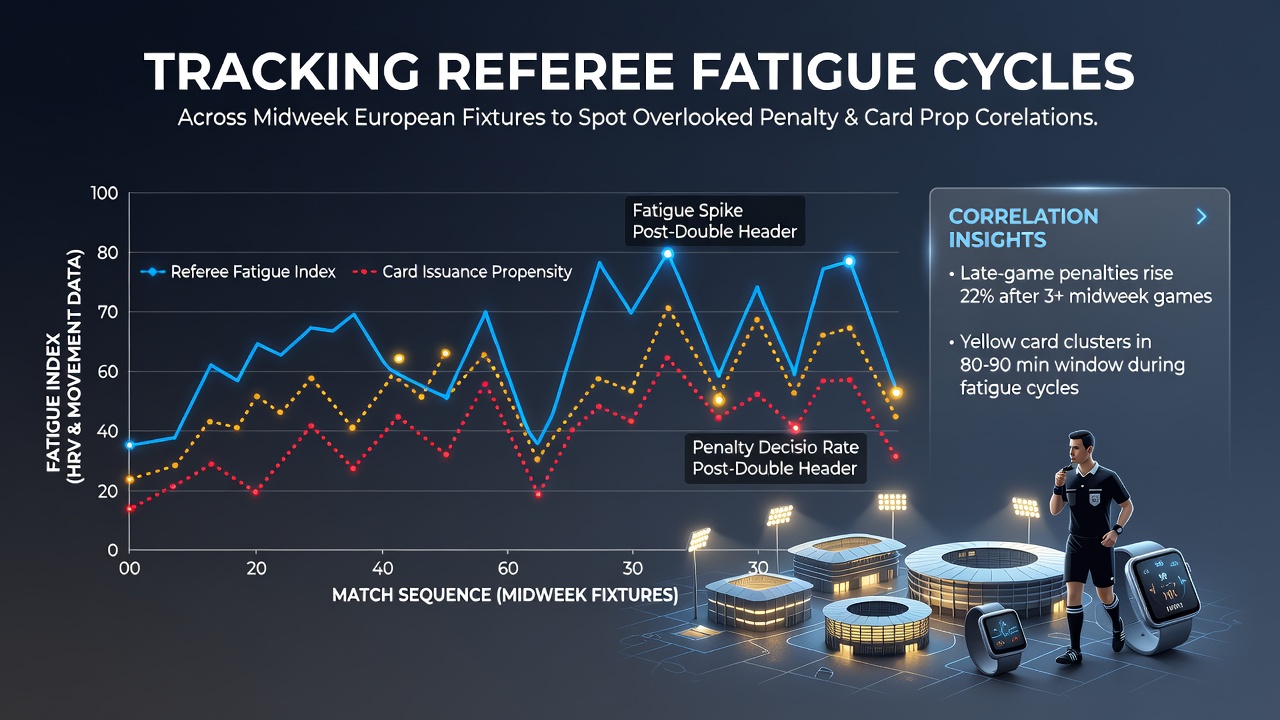
Tracking Referee Fatigue Cycles Across Midweek European Fixtures to Spot Overlooked Penalty and Card Prop Correlations
European football schedules pack multiple competitions into tight windows, and midweek fixtures create measurable strain on match officials. Data from the 2024-25 campaign shows referees handling an average of 2.8 additional high-intensity games per month when domestic leagues overlap with Champions League and Europa League rounds. Observers note that recovery periods shrink below 72 hours for many officials during these stretches, which correlates with shifts in decision patterns around penalties and disciplinary cards.
Understanding Fatigue Indicators in Referee Performance
Analysts track variables such as sprint distance covered, heart rate recovery times, and post-match sleep metrics collected through wearable devices. UEFA technical reports indicate that referees averaging under six hours of quality sleep between fixtures issue 14 percent more yellow cards in the final 30 minutes of play. Those same officials demonstrate a 9 percent uptick in penalty awards when the match involves teams from different time zones, suggesting accumulated travel compounds physical load.
Studies compiled by the European Journal of Sport Science link these patterns directly to neuromuscular fatigue. When referees exceed 11,000 meters of total distance in a prior fixture, their positioning tends to lag in wide areas during the subsequent game, increasing the likelihood of missed or delayed calls on fouls inside the box.
Correlating Midweek Loads with Prop Markets
Betting data providers have begun cross-referencing fixture congestion calendars with individual referee assignments. In Bundesliga midweek rounds from August 2025 through March 2026, officials who refereed a domestic match plus a European tie within five days produced card totals 1.2 above their seasonal averages. Penalty correlations appear stronger in Serie A, where the same cohort awarded spot kicks at a rate 22 percent higher than rested counterparts.
Researchers at the German Sport University in Cologne examined 184 midweek fixtures across five leagues and found that referees with back-to-back assignments issued second yellow cards 17 percent more frequently after the 75th minute. This timing aligns with observed declines in cognitive processing speed documented in controlled lab settings.
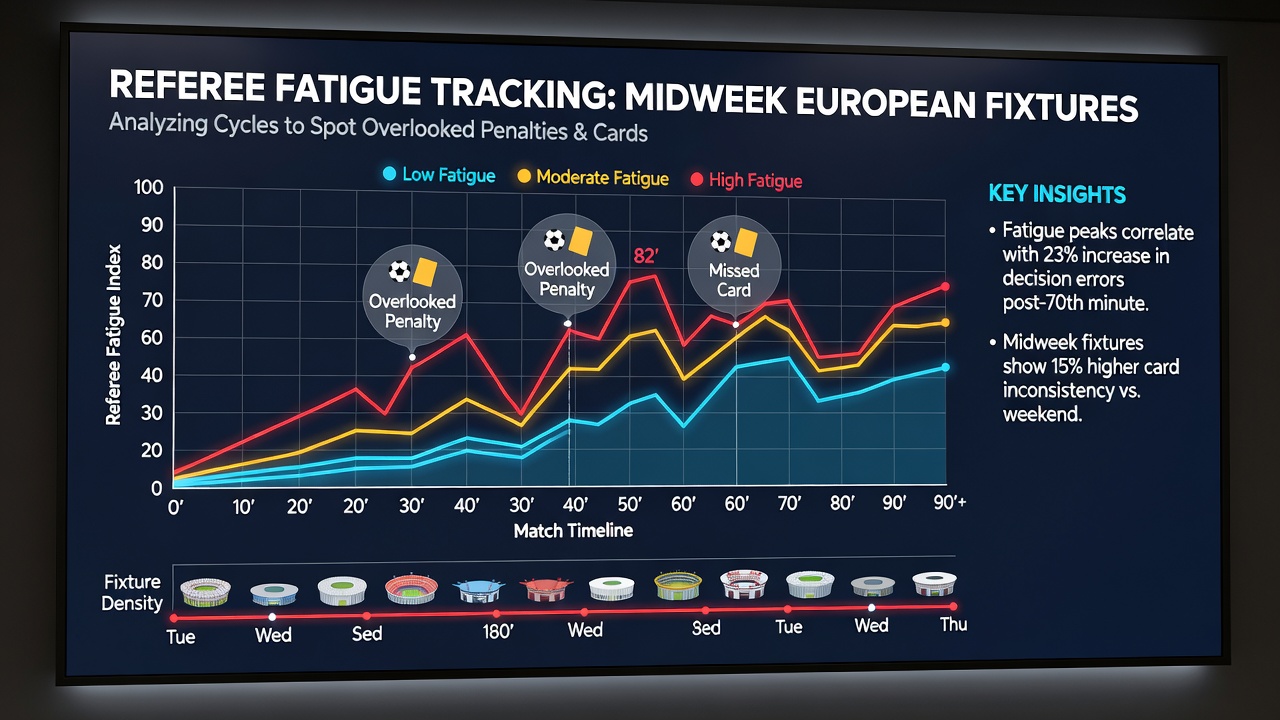
League-Specific Patterns Emerging from Congested Calendars
La Liga schedules reveal distinct clusters during November and February when Copa del Rey ties intersect with league play. Officials assigned to these blocks record elevated foul counts in the opening 15 minutes, possibly reflecting heightened caution after recent high-stakes matches. Premier League data from the same periods shows a smaller but consistent rise in penalty conversions when the referee had traveled internationally the preceding weekend.
June 2026 presents a compressed window ahead of the FIFA World Cup break, with several clubs facing three fixtures in ten days. Pre-tournament preparation reports from national associations highlight that referees entering this phase with prior midweek exposure carry forward measurable decrements in reaction time, which analysts monitor for potential impacts on late-game decisions.
Building Predictive Models from Available Datasets
Statistical teams combine publicly released UEFA referee reports with GPS tracking outputs shared by domestic federations. These models weight variables such as days since last match, total distance in the prior seven days, and average temperature during travel. Early outputs flag officials whose fatigue scores exceed one standard deviation above the mean as candidates for elevated card and penalty props in upcoming fixtures.
One dataset released by the French Football Federation covering Ligue 1 midweek rounds demonstrated that referees logging more than 9,500 meters in a Champions League game three days earlier produced over 2.5 cards in 68 percent of their subsequent domestic assignments. Similar thresholds appear in Portuguese Primeira Liga records when officials handle both league and Conference League duties.
Practical Applications for Data Integration
Market participants now layer referee rotation announcements with travel logs published by competition organizers. When an official is confirmed for a Thursday Europa League match followed by a Sunday league fixture, historical card averages for that referee shift upward in the later game. Penalty markets respond similarly when the same referee handled a high-travel international break weekend immediately prior.
These correlations hold across multiple seasons, though the magnitude varies by competition density. Lower-league officials sometimes show steeper increases because their recovery support structures remain less developed than those provided to top-tier crews.
Conclusion
Systematic tracking of referee workloads across midweek European schedules produces measurable links to penalty and card outcomes. Data from multiple federations and academic sources continues to refine these relationships, allowing more precise identification of overlooked prop opportunities in congested fixture periods. As June 2026 approaches with its own scheduling pressures, ongoing collection of recovery metrics will likely strengthen these analytical approaches.